
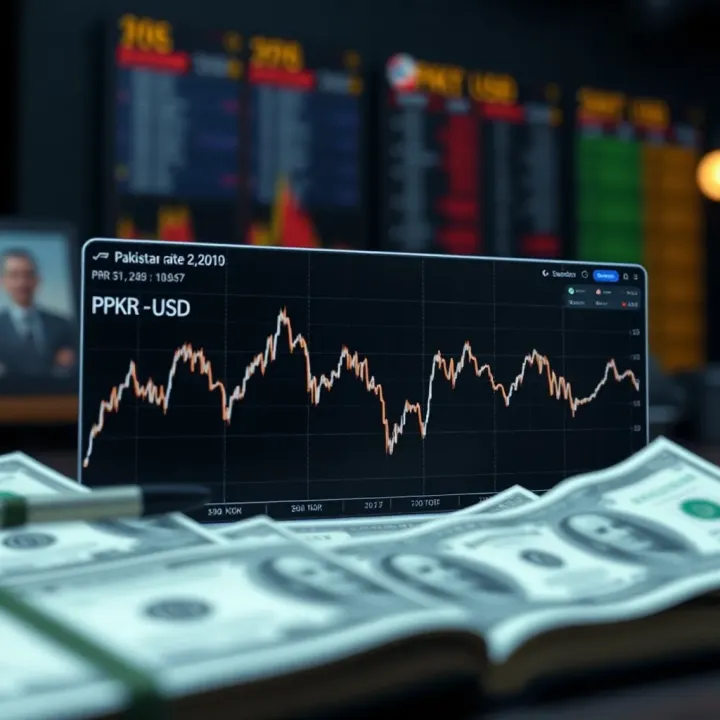
PKR to USD Forecast: Exchange Rate Trends Explained
📉 Explore PKR to USD trends with a sharp focus on economic indicators, govt policies, and global events. Stay ahead for smart business and investment choices. 💼💰
Edited By
James Thornton
The dollar exchange rate against the Pakistani rupee is a key indicator that impacts everything from inflation to imports and remittances. Understanding what drives this exchange rate helps traders, investors, and everyday Pakistanis prepare for economic shifts. Over the past year, the rupee has faced pressure due to factors like rising import bills, fluctuating foreign reserves, and adjustments in monetary policy by the State Bank of Pakistan (SBP).
Several economic elements influence the dollar-rupee rate:
Trade Deficit: Pakistan imports far more than it exports, which creates a demand for dollars.
Foreign Remittances: Inflows from overseas Pakistanis partially offset the dollar demand.
SBP Reserves: The central bank’s reserves determine its ability to intervene in the currency market.
Interest Rates: SBP’s policy rate affects capital flows; higher rates tend to support the rupee.
Inflation: Persistent inflation erodes purchasing power and weakens the rupee.
On the government side, currency management strategies such as selling dollars in the open market and imposing restrictions on luxury imports aim to stabilise the rupee. Recently, policies targeting improved tax collection by the Federal Board of Revenue (FBR) and enhanced export incentives have also shaped the outlook.
Global events, including shifts in US Federal Reserve interest rates, oil price fluctuations, and geopolitical tensions, add complexity. For example, a hike in the Fed's rate typically strengthens the US dollar globally, putting additional pressure on the rupee.
The interplay of domestic economic indicators with international events creates a dynamic environment for the dollar-rupee exchange rate, making continuous monitoring essential for informed decision-making.
Looking ahead, experts expect the rupee to remain pressured in the near term given Pakistan’s import needs and external debt servicing. However, improvements in export earnings and remittances, alongside a stable SBP policy, could prevent severe depreciation.
This article will outline the recent trends, explain key economic drivers, and present expert forecasts to help you grasp the future of Pakistan’s dollar exchange rate.
Understanding the current status of the US dollar against the Pakistani rupee is essential for anyone involved in trading, investing, or economic analysis in Pakistan. The exchange rate directly influences import costs, inflation, and remittance values, which affects day-to-day financial decisions and policy-making. For example, many essential imports like petroleum, machinery, and electronics rely on dollar transactions, making the exchange rate a major factor in domestic price levels.
The US dollar has shown mixed trends against the Pakistani rupee lately. After a period of relative stability, there was a noticeable climb in the exchange rate, with the rupee depreciating against the dollar by roughly 10-12% over the past six months. This movement reflects Pakistan’s ongoing trade deficit challenges and fluctuating foreign exchange reserves. Daily fluctuations often respond to political announcements, changes in SBP (State Bank of Pakistan) policies, and shifting investor sentiment. For instance, during months when remittance inflows slowed, the dollar gained upward pressure, making it costlier for importers.
Looking back at previous years helps us put current figures into perspective. Compared to the rupee’s exchange value at the start of the last decade, the dollar has almost doubled in value against it. For example, around 2010, the rate hovered near Rs 85 per dollar, whereas today it stands above Rs 280 in the open market. This long-term depreciation shows structural challenges in Pakistan’s economy, including persistent current account deficits and inflation pressures. Still, there were periods like 2014-2015 when the rupee strengthened temporarily due to increased remittances and better export performances, but these proved short-lived.
Staying updated on current exchange rates helps businesses plan import orders, manage cash flow, and hedge currency risks effectively. It also assists investors in understanding market volatility and timing their currency exposure.
To sum up, the current state of the US dollar against the rupee offers valuable clues about Pakistan’s economic health and the pressures on its currency. Understanding recent trends and historical context equips traders, investors, and analysts to better anticipate and respond to upcoming shifts in the exchange rate market.
Understanding the economic factors that influence the US dollar's exchange rate against the Pakistani rupee is essential for traders, investors, and anyone navigating the currency market. These factors reflect the underlying health of Pakistan’s economy and dictate how the rupee performs on the foreign exchange market. The key elements include inflation, interest rates, balance of payments, trade deficits, foreign exchange reserves, and remittances.
Inflation and interest rates have a direct impact on the dollar-rupee exchange rate. When inflation in Pakistan rises sharply, the purchasing power of the rupee decreases. This typically leads to a weaker rupee against the dollar because exporters and investors demand more dollars to protect their earnings or investments. For example, during periods when inflation exceeded 15%, the rupee's value dropped noticeably as businesses hesitated to hold PKR-denominated assets.
Similarly, the State Bank of Pakistan (SBP) adjusts interest rates to combat inflation or stimulate growth. Higher interest rates tend to attract foreign investment, boosting demand for the rupee and strengthening it against the dollar. However, if the rates remain low while inflation stays high, the rupee often depreciates. This push-and-pull between inflation and interest rates shapes daily exchange rate movements.

Pakistan's balance of payments and trade deficits are critical in shaping the dollar rate. A trade deficit occurs when imports exceed exports, leading to a net demand for foreign currency to pay for goods. Pakistan has struggled with a persistent trade deficit, largely due to high imports of energy, machinery, and consumer goods.
The country’s balance of payments also includes capital inflows and outflows. When the trade deficit widens without sufficient capital inflows, the demand for dollars spikes, putting pressure on the rupee. For instance, in fiscal years where the trade deficit shot above Rs 4 trillion, the rupee faced sharp depreciation. Balancing exports and imports, plus attracting foreign investments, remains vital to stabilising the currency.
Pakistan’s foreign exchange reserves act as a buffer against volatility in the dollar rate. Higher reserves give the SBP room to intervene in the market by selling dollars to support the rupee when needed. When reserves fall below adequate levels (typically below $15 billion), it signals vulnerability, often leading to a weakened rupee.
On the positive side, remittances from Pakistanis working abroad inject much-needed foreign currency into the economy. Pakistan regularly receives over $30 billion annually in remittances, helping to ease the pressure on reserves and support the rupee. Periods of rising remittances often coincide with better rupee stability, especially during Ramadan and Eid when workers send extra funds back home.
Economic factors continually shape how the dollar and rupee interact. Keeping an eye on inflation, interest rates, trade balances, reserves, and remittances offers a clearer picture for both short-term trades and long-term investments.
Government policies and central bank actions hold significant sway over Pakistan’s dollar exchange rate. Their decisions directly affect currency stability, investor confidence, and foreign exchange supply, all vital for keeping the rupee’s value in check. Understanding these roles equips traders, investors, and analysts with the necessary tools to anticipate market movements.
The State Bank of Pakistan (SBP) uses monetary tools to influence the dollar-rupee rate. By adjusting the policy rate, the SBP can attract foreign capital or cool down inflationary pressures that typically weaken the rupee. For instance, in recent months, the SBP raised its policy rate to near double digits aiming to stabilise the currency amid inflationary trends.
Besides interest rates, SBP actively intervenes in the foreign exchange market to smooth volatility. It sells dollars from reserves when the rupee comes under sudden pressure and buys dollars when there’s an oversupply. These interventions help prevent sharp swings that can panic businesses and consumers alike.
Fiscal discipline plays a key role in exchange rate management. When the government’s budget deficit widens due to excessive borrowing or spending, it puts pressure on the rupee. For example, increasing external debt servicing or subsidies without corresponding revenue can lead to increased demand for dollars.
The government’s efforts to widen the tax base through FBR reforms and curb unnecessary imports are aimed at reducing the trade deficit, a major factor dragging the rupee down. Rationalising subsidies and cutting down on unproductive expenditure also contribute towards currency stability by lessening the fiscal burden.
International Monetary Fund (IMF) programmes have shaped Pakistan's economic policies in recent years, particularly regarding currency stability. IMF’s conditionalities often require the government to implement reforms like reducing subsidies, privatising state enterprises, and adopting market-driven exchange rates.
These measures can temporarily increase pressure on the rupee but aim at long-term sustainability. For example, the IMF's insistence on allowing the rupee to find its market value helps correct imbalances, although it causes short-term volatility. Moreover, IMF support often reassures investors and donors, improving foreign exchange inflows and easing pressure on reserves.
Government and central bank policies act like the rudder steering Pakistan’s dollar exchange rate. Their coordinated and timely decisions are essential to keep the currency within manageable bounds and maintain investor trust.
In summary, the SBP’s monetary policy, government fiscal measures, and IMF conditionalities work together, influencing Pakistan’s currency dynamics. Traders and investors who monitor these factors stand a better chance to anticipate exchange rate shifts and manage risks effectively.
Global and regional factors often play a big role in shaping Pakistan's dollar exchange rate. It is crucial to understand these influences because the rupee does not move in isolation; external shocks or trends can result in sudden shifts that affect everything from import costs to remittances. Traders, investors, and policymakers watch these to anticipate currency movements and adjust their strategies accordingly.
The strength of the US dollar globally exerts direct pressure on the rupee. When the dollar strengthens against other major currencies, Pakistan's imports priced in dollars become more expensive, putting pressure on the rupee. For instance, during times when the Federal Reserve raises interest rates to curb inflation, the dollar tends to rally. This happened in the recent past when the Fed's hawkish stance led to a surge in the dollar, pushing the PKR down to new lows.
At the same time, commodity prices traded in dollars, like oil, also impact Pakistan's foreign exchange demand. If crude prices rise, Pakistan needs more dollars to pay for imports, also straining the rupee. Therefore, fluctuations in global markets, including stock indices, bond yields, and commodities, indirectly influence Pakistan’s dollar rate.
Political tensions, conflicts, or diplomatic shifts in South Asia and beyond can cause volatility in Pakistan's currency market. Take, for example, the impact of US-China tensions or instability in the Middle East—both situations can push investors toward the dollar as a safe haven. This increases dollar demand and weakens the rupee.
For Pakistan, regional geopolitical events also matter a lot. Any change in Pakistan-India relations, cross-border conflicts, or Afghan peace developments can create uncertainty. Investors then may either pull back or seek higher dollar reserves, thus impacting demand and causing rapid rupee depreciation or appreciation depending on the scenario.
Geopolitical uncertainty often causes sharp swings in currency markets, and Pakistan's economy is particularly sensitive to these shifts.
Economic changes in neighbouring countries like China, Iran, and Afghanistan affect currency flows through trade and investment. Given China’s role as a major trade partner and Belt and Road Initiative investor, its economic health influences Pakistan’s forex landscape. Slowdown in China could reduce exports and foreign direct investment, reducing dollar inflows.
Similarly, Iran’s situation affects Pakistan’s energy import dynamics. If sanctions or disruptions occur, Pakistan may find alternative sources or face increased costs, affecting foreign exchange demand. Afghanistan’s stability also matters as it affects border trade and remittance channels.
In short, regional economic conditions have a multiplier effect on dollar demand in Pakistan. Traders and financial analysts closely monitor these developments to evaluate potential impacts on the PKR.
Understanding these global and regional influences offers better clarity on why the dollar rate in Pakistan fluctuates beyond domestic economic factors. It equips stakeholders to better manage risks, seize market opportunities, and understand the complex forces at play behind the rupee's daily value.
Forecasting the dollar-rupee exchange rate matters a lot for traders, investors, and businesses in Pakistan. Knowing where the rate might head helps plan imports, exports, and investment decisions with better confidence. For example, importers secure contracts only if they anticipate whether the dollar will stay stable or spike higher, which directly impacts their costs.
Experts combine economic data, geopolitical events, and market behaviour to shape their outlook on the dollar rate. Analysts at Pakistan's financial institutions often use recent trade deficit figures, inflation rates, and SBP's (State Bank of Pakistan) monetary policies to predict trends. Market sentiment, reflecting collective feelings of traders and investors, can swing rapidly due to news like IMF programme progress or foreign remittance inflows. When sentiment is bullish for the dollar, demand rises, pushing the rate upward.
Expert insights are key because they sift through complex signals that the average person may miss, giving sharper predictions.
Short-term predictions focus on immediate factors such as government announcements, quarterly trade balances, and currency interventions by SBP. For instance, sudden foreign exchange reserves fluctuations can cause sharp rate changes within weeks. Meanwhile, long-term outlooks weigh structural aspects like Pakistan’s export diversification, energy imports, and ongoing fiscal reforms.
Traders may focus on the short-term to capitalise on quick moves, while investors and policymakers watch the long-term trends to make strategic plans. The difference lies in the volatility—short term can be unpredictable, while long term moves generally follow economic fundamentals.
Several risks complicate accurate forecasts of the dollar rate in Pakistan. Political instability often unsettles markets, causing abrupt rate jumps. External shocks such as global oil price spikes or geopolitical tensions in the region can also disrupt expectations.
Moreover, delays or conditions in IMF agreements could strain foreign reserves, leading to rupee depreciation. Weather-related challenges impacting agriculture exports and remittances add more uncertainty to the outlook.
Understanding these risks helps all stakeholders prepare better. For example, exporters might hedge currency risks, while policymakers might build buffers to cushion shocks.
By considering expert opinions, distinguishing short-term and long-term outlooks, and recognising risks, one can get a clearer picture of Pakistan’s dollar exchange rate future. This clarity supports smarter financial planning for businesses and individuals navigating currency fluctuations.
📉 Explore PKR to USD trends with a sharp focus on economic indicators, govt policies, and global events. Stay ahead for smart business and investment choices. 💼💰
💵 Explore why the US dollar rate changes in Pakistan, covering economic shifts, global factors, policies, and market trends shaping the rupee value.
📉 Get a detailed forecast of USD to PKR over the next 3 months, covering economic data, policies, and expert views to guide your currency decisions. 💼

Explore the SAR to PKR exchange rate forecast 📈 and its effects on Pakistan’s economy, remittances, trade with Saudi Arabia, and impact on businesses and consumers.
Based on 10 reviews