
Exness WhatsApp Group Links: Connecting Pakistani Traders
📱 Discover how Exness WhatsApp group links connect Pakistani traders, boost communication, and provide authentic trading insights for active market engagement.
Edited By
Isabella Reed
Choosing the right account type at Exness is the first step for Pakistani traders to succeed in online forex and CFD trading. Different accounts cater to various trading styles, capital sizes, and risk appetites. Understanding these types helps you avoid confusion and pick one that matches your goals perfectly.
Exness offers accounts with distinct features ranging from low minimum deposits to tight spreads and fast execution speeds. These options suit beginners trying out the markets as well as experienced traders aiming for high volumes or professional services.
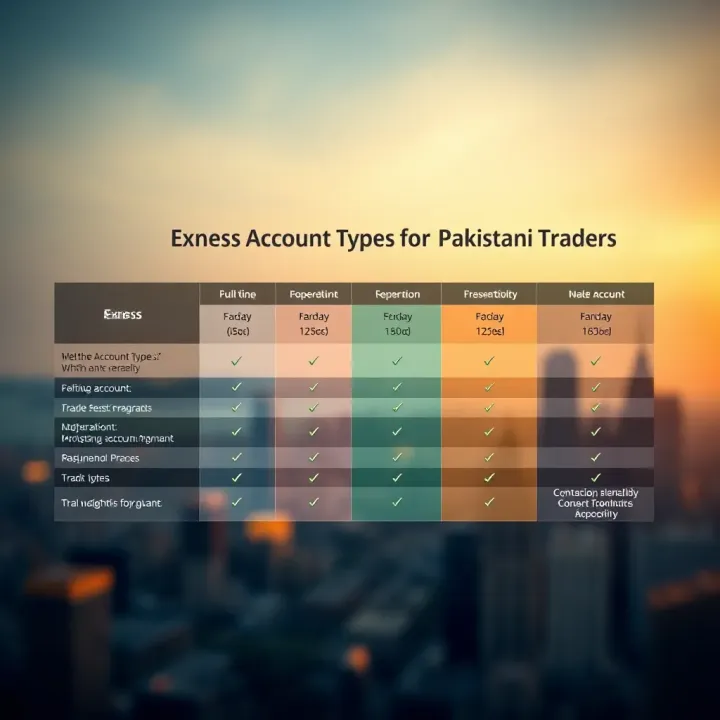
Selecting an account at Exness is about matching your trading strategy with the account's features rather than picking one based on brand name or hearsay.
Account type affects the costs you pay and the kind of tools you get. For instance, some accounts offer zero commission but wider spreads, while others have low spreads but charge a fixed commission per trade. These differences influence profits and losses, especially for scalpers or frequent traders.
Plus, leverage levels vary by account and have direct consequences on risk. While higher leverage allows bigger positions, it also raises the chance of losing more quickly.
Deposit Amounts: Smaller deposits are common among retail traders in Pakistan; therefore, accounts with low minimum deposits (like micro or standard) are often more accessible.
Leverage Options: Pakistan’s regulatory environment permits flexible leverage, but it’s wise to choose a level suited to your experience.
Trading Instruments: Exness accounts provide access to forex pairs, indices, cryptocurrencies, and commodities. Your account choice determines which instruments and trading conditions are available.
Spreads and Commissions: Lower spreads can improve profitability, particularly in volatile markets affected by events such as SBP announcements or geopolitical developments.
Execution Speed: Fast execution ensures trades enter the market timely, crucial during news spikes affecting PKR pairs or commodity prices.
Familiarity with these factors will guide Pakistani traders to select an Exness account fitting their needs, helping them handle market challenges and optimise returns.
In the following sections, we will break down each Exness account type, illustrating their features, benefits, and the ideal trader profile for each. This clarity is key for confident decision-making amid Pakistan's dynamic trading landscape.
Different traders have different needs, and Exness understands this. That’s why they offer a variety of trading accounts, each designed with specific features to suit various experience levels and trading styles. Choosing the right account can affect your trading costs, order execution, and most importantly, your profitability.
Standard Account is the most popular Exness account type, offering zero commission and competitive spreads starting from 0.3 pips. It supports leverage up to 1:2000, which appeals to many traders looking for flexibility. This account works well on popular platforms like MetaTrader 4 and 5.
This account is ideal for Pakistani traders who want a straightforward, no-frills option. It suits those still building confidence and prefer to avoid commission fees while trading major forex pairs or commodities. Also, casual traders who want to keep their costs low without compromising speed often pick Standard.
Spreads remain variable but tight on Standard accounts, especially during major market sessions. For example, during London or New York trading hours, EUR/USD spreads can stay as low as 0.3 pips. There is no commission, so costs come solely from the spread, making it easier for new traders to manage.
The Standard Cent Account targets beginners who are testing the waters with low investment. It uses cents instead of dollars, meaning that a balance of Rs 1,000 is represented as 100,000 cents. This allows traders to open small positions and minimise risk.
The account supports all basic trading instruments with leverage up to 1:2000. Traders can deposit as low as $1 and practice without significant financial exposure. The platform's micro-lot sizes let users try strategies in a real environment without bigger stakes.
For a novice trader in Pakistan, this account acts like a training ground. You make more confident decisions through live trading with minimal risk. It also helps in understanding how leverage, spreads, and market movements affect your capital before going for bigger accounts.
The Pro Account offers professional-grade trading conditions. It provides ultra-low spreads starting from 0.1 pips and fast execution with no requotes. Traders can expect tighter spreads during volatile markets and additional support for automated trading.
Serious traders who require precise execution and access to deep liquidity prefer the Pro Account. It's well-suited for those trading large volumes or employing scalping and hedging strategies that demand minimal slippage.
Although the spreads are lower, this account involves a small commission fee per trade. However, experienced traders often find the overall cost competitive due to tight spreads and execution speed, making it worthwhile.
The Zero Account offers true zero spreads on major currency pairs during active hours, which means the difference between buy and sell price can be as low as 0. This is paired with fixed commissions on trades.
Traders with experience who want to minimise trading costs and can actively manage positions benefit most. It also suits those engaged in arbitrage or high-volume trading where every pip counts.
This account ensures lightning-fast execution, reducing the risk of slippage. For Pakistani traders dealing in fast markets like forex or cryptocurrencies, this speed is crucial to locking in profits.
Raw Spread Account provides direct access to market spreads with no markups. Spreads start from 0.0 pips and fluctuate based on liquidity providers. Traders receive the real market spread, which can widen during news releases.
A transparent commission applies on every trade, typically lower than on Zero Account. This structure suits traders who prefer knowing their exact trading costs upfront.
Scalpers and high-frequency traders find the Raw Spread Account ideal. Real market prices combined with low commissions provide a competitive edge when executing multiple quick trades, especially in volatile market conditions.
Selecting the right Exness account depends on your skill level, trading frequency, and cost preferences. Each account has pros and cons, so consider your needs carefully before committing.
Choosing the right Exness account depends largely on your trading goals, experience, risk tolerance, and preferred instruments. This decision affects your trading costs, access to tools, and ultimately, your success. For Pakistani traders, taking time to assess these factors helps avoid unnecessary charges and ensures that the account fits local financial contexts and trading habits.
If you are new to trading, a Standard or Standard Cent account usually suits you better. These accounts offer low minimum deposits and simpler trading conditions, which helps you learn without risking too much capital. For example, a beginner using a Standard Cent account can trade with smaller amounts, reducing the pressure while gaining confidence.
Professional or experienced traders tend to opt for Pro, Zero, or Raw Spread accounts. These accounts offer tighter spreads, faster execution speeds, and advanced tools. If you trade frequently or use complex strategies, the benefits outweigh the slightly higher costs.
Your willingness to accept losses and the amount you can invest safely directly influence your choice. Traders with low risk tolerance and smaller funds should pick accounts offering fixed spreads and low minimum deposits to limit exposure. For instance, a trader investing Rs 20,000 might prefer a Standard account to manage risk.
On the other hand, traders willing to take larger positions and accept market volatility often need accounts like Raw Spread, where the cost per trade is lower, but spreads fluctuate. This flexibility is ideal for those with higher capital and experience in managing risk.
Your choice of instruments can narrow down account types. Traders focusing on Forex and metals might find all account types supportive but pay attention to spreads and commissions.
If you prefer cryptocurrencies, check the account’s trading hours and fees, as not all Exness accounts are equally well-suited for crypto due to market volatility and execution conditions. Traders focusing on crypto might prioritise accounts with lower commission and faster execution during volatile periods.
Day traders or scalpers require accounts with very low spreads and fast order execution, such as Raw Spread or Zero accounts. Conversely, long-term investors may prefer Standard accounts where costs stay predictable even with wider spreads.
If you use automated strategies or high-frequency trading, commission costs and execution speed become vital, pushing you toward professional-level accounts.
Spreads – the difference between buying and selling price – affect your profitability. Accounts like Standard have fixed or wider spreads, which are simpler but marginally costly for high-volume trading.
Accounts like Raw Spread offer variable spreads close to zero but charge commission per trade, so the total cost depends on your trading volume.
Standard and Standard Cent accounts usually have no commission, making them suitable for traders focusing on small, less frequent trades. Pro, Zero, and Raw Spread accounts charge commissions but compensate with lower spreads. For a Pakistani trader making multiple trades daily, the reduced spread plus commission might save more money overall than higher spreads with no commission.
In summary, match your account choice with your trading pattern, risk level, instrument focus, and cost preference. This practical approach helps save costs while aligning with your trading goals in Pakistan’s market context.
Opening and verifying an Exness trading account is essential for Pakistani traders who want a smooth, secure experience. The process ensures your identity is confirmed, which protects both you and the platform from fraud. It also complies with regulatory requirements that apply to brokers like Exness, matching international standards and Pakistani regulations.
Pakistani traders need to submit two main types of documents: an official ID and proof of address. Typically, your Computerised National Identity Card (CNIC) serves as valid ID. For address verification, a recent utility bill or bank statement that shows your current residence works well. These documents confirm you’re who you say you are and help prevent issues during account operations.
Registering on the Exness website is straightforward. You start by creating a free account, providing your email and mobile number. Then, you select the type of trading account that fits your needs before uploading the necessary documents. The platform guides you through each step, making the process user-friendly even if you are new to online trading. Completing registration early lets you explore the platform’s features and prepare for actual trading.
Submitting your CNIC and valid address proof is crucial for KYC compliance. This step prevents identity theft and ensures lawful trading activity. Exness uses this information to verify your legitimacy before allowing you to deposit or withdraw funds. Failure to provide accurate documents can delay or block access to your account features.
Verification usually takes 24 to 48 hours after submitting all documents, though it could be quicker or take longer depending on the volume of applications. Exness notifies you via email when your account is verified. During this time, it’s best to avoid making deposits or transactions to prevent complications. Knowing the typical timeline helps you plan your trading activities without surprises.
Completing registration and KYC not only protects your investments but also opens access to all Exness features tailored for Pakistani traders.
By understanding these steps carefully, Pakistani traders can confidently open and verify their Exness accounts, ready to tap into global trading markets with peace of mind.
Smooth deposit and withdrawal processes are key for Pakistani traders using Exness accounts. These options affect not only how quickly traders fund their accounts or access profits but also the overall convenience and cost of managing funds. Understanding available payment methods, transaction times, and potential issues helps ensure a hassle-free trading experience.
Exness supports several popular payment channels in Pakistan, including JazzCash, Easypaisa, and traditional bank transfers. JazzCash and Easypaisa are widely used mobile wallets, offering instant deposits with minimal fuss. For example, JazzCash allows users to transfer funds directly from their mobile account to Exness with just a few taps, which is especially convenient for traders based outside major cities.
Bank transfers remain a reliable option for larger amounts, providing a direct connection between Pakistani banks and Exness. While bank transfers may take longer than instant wallet payments, they usually handle higher deposit limits and can be preferable for traders funding their accounts with Rs 1 lakh or above.
Each payment method has its constraints. JazzCash and Easypaisa, for instance, sometimes impose daily or monthly limits on transfer amounts, which might restrict large transactions for active traders. Also, while Exness does not charge fees for deposits, some wallets or banks might deduct minor charges, so it is wise to check with your service provider.
Bank transfers can involve processing fees, depending on your bank’s policies, and occasionally require additional verification. This can delay funding slightly and may add to overall costs. Pakistani traders should confirm fees directly with their bank before initiating high-value transfers.
Withdrawal times from Exness accounts vary by method. Typically, mobile wallet withdrawals like JazzCash and Easypaisa are processed within minutes, allowing Pakistani traders quick access to funds—very useful when timely payments are necessary. Meanwhile, bank transfer withdrawals might take 24 to 72 hours due to interbank clearance processes.
Traders should note that withdrawal processing depends on business days; weekends or public holidays can cause delays in bank transactions. Planning withdrawals ahead of time can help mitigate inconvenience caused by these gaps.
Some users face challenges such as withdrawal rejections or delays, often linked to incomplete documentation or mismatched payment details. Exness requires withdrawal accounts to match the registered user’s information strictly, so traders must ensure CNIC or bank account details are accurate.
If funds get delayed, contacting Exness support promptly tends to resolve most cases quickly. Additionally, maintaining up-to-date KYC compliance prevents unnecessary pauses in withdrawal processing. Pakistani traders should also be cautious about using third-party wallets or bank accounts, as these often cause rejections or compliance flags.
Traders are advised to keep transaction receipts and double-check account details before making deposits or withdrawals to avoid complications.
Navigating deposits and withdrawals efficiently is just as important as choosing the right trading account. Being aware of available payment methods, their fees, and transaction timelines saves time and money, empowering Pakistani traders to focus on their market strategies confidently.
📱 Discover how Exness WhatsApp group links connect Pakistani traders, boost communication, and provide authentic trading insights for active market engagement.

Explore Qotex, an online trading platform popular among Pakistani traders 🇵🇰. Learn its features, instruments, platform pros and cons, and safety tips for smart trading.

📈 Explore TradingView.com with a detailed guide for Pakistani traders! Learn charting tools, community tips, and broker links to trade smarter.
💻 Learn how Pakistani traders can set up and use Quotex on PC with full features, security tips, and system needs for smooth, safe online trading experience 📈
Based on 5 reviews