
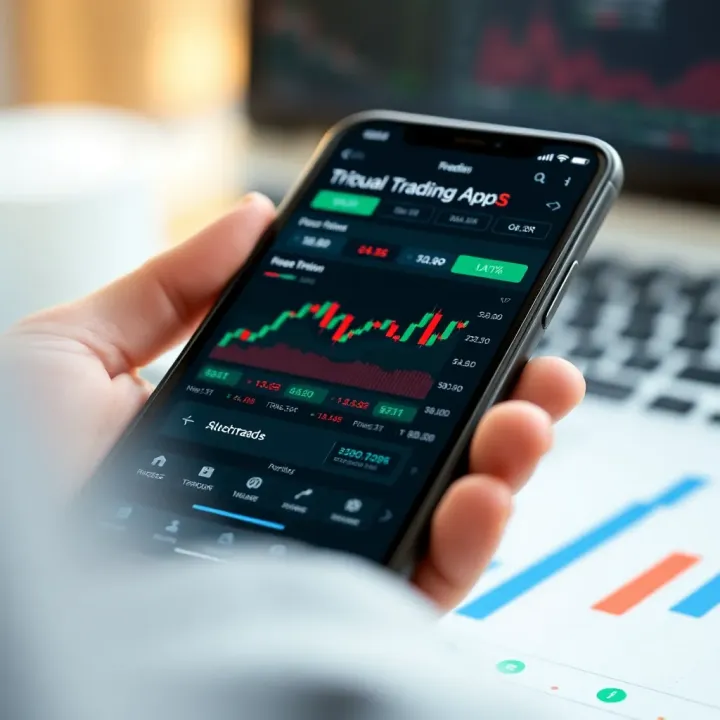
Understanding Trading Apps Without Investment
🔍 Explore trading apps that require no investment! Learn how they work, their pros & cons, and tips to use them smartly for risk-free practice 📱
Edited By
Sophie Clarke
Derivatives in investment banking (IB) form a vital part of Pakistan's growing financial sector. Simply put, derivatives are contracts whose value depends on underlying assets like stocks, commodities, currencies, or interest rates. Traders and financial institutions use these tools to manage risk or speculate on future price movements.
Investment banks in Pakistan play a strong role in structuring, facilitating, and trading derivatives. These banks help clients hedge against exposures or enhance returns by offering customised derivative products. For example, exporters worried about rupee-dollar fluctuations may use currency forwards arranged by their investment bank to secure today’s rates for future contracts.
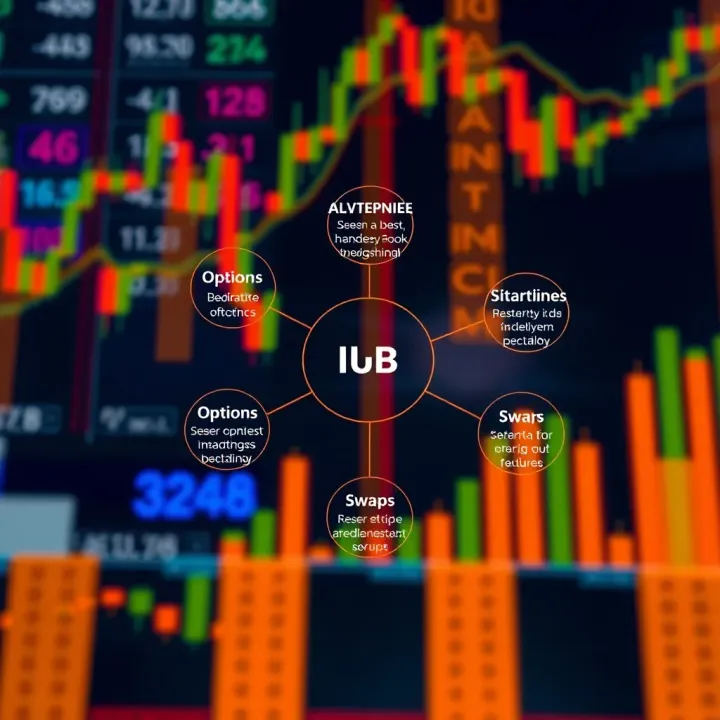
Common derivatives used in Pakistan include futures, options, forwards, and swaps. Futures contracts are agreements to buy or sell assets at a set price on a future date, widely used for commodities like wheat or oil. Options give the buyer the right, but not the obligation, to buy or sell an asset—helping investors limit downside risks without losing growth potential.
Risk management is crucial here. Derivatives offer powerful tools, but they carry complex risks including counterparty default and market volatility. Pakistan’s financial regulators, such as the Securities and Exchange Commission of Pakistan (SECP), oversee derivative markets to prevent misuse and protect investors.
Derivative instruments are not just for large corporations—retail investors can benefit too, especially by understanding how to hedge risks or gain exposure in the Pakistan Stock Exchange (PSX) without direct asset purchase.
Overall, grasping the concepts and practical applications of derivatives helps traders, investors, and analysts make informed decisions tailored to Pakistan’s unique market environment. This knowledge is equally relevant for students aspiring to enter finance careers amid Pakistan’s expanding capital markets.
Understanding derivatives is essential for anyone involved in finance or investment, especially in Pakistan's emerging economic landscape. Derivatives are financial contracts whose value depends on an underlying asset, such as stocks, currencies, or commodities. Investment banking (IB) plays a key role in structuring, facilitating, and trading these instruments, helping clients manage risk or pursue strategic gains. This section offers a foundation for grasping how derivatives work and why investment banks remain central players in this space.
Derivatives serve as contracts between two parties that derive their value from an underlying asset. They allow investors to trade risk rather than the asset itself. For example, a wheat farmer and a flour miller might use a derivative to lock in prices before the harvest, protecting both from sudden market swings. This risk transfer ability makes derivatives useful for hedging and speculation.
These contracts come in different forms, each with unique features:
Futures and forwards are agreements to buy or sell an asset at a predetermined price on a set future date. While futures trade on exchanges, forwards are customised over-the-counter (OTC) contracts.
Options provide the right, but not the obligation, to buy or sell an asset before a specific date, giving buyers flexibility.
Swaps involve exchanging cash flows or liabilities, such as swapping fixed interest payments for variable ones.
Each derivative type suits specific financial goals. For instance, a Pakistani importer overwhelmed by rupee-dollar fluctuations may use currency forwards to cap losses.
Investment banks act as intermediaries by creating and managing derivative contracts. They connect buyers and sellers, provide liquidity, and structure sophisticated products tailored to client needs. This intermediary role is especially vital in Pakistan, where derivative markets are still developing and less accessible.
Clients ranging from corporates to institutional investors use derivatives for hedging risks, such as currency or interest rate shifts, or for speculative and arbitrage opportunities. For example, a manufacturing firm facing unpredictable raw material prices might purchase commodity futures through its bank to stabilise costs. This shows how IBs use derivatives to add practical value beyond simple investment.
Derivatives shaped by investment banks help Pakistani businesses and investors shield themselves from risk while pursuing growth in volatile markets.
Understanding these basics prepares readers to explore how derivative instruments function locally and the strategic role investment banks play in promoting financial stability and opportunity.
Derivatives come in several forms, each serving specific purposes in financial markets and investment strategies. Understanding the common types of derivative instruments helps traders, investors, and financial analysts make informed decisions and manage risks effectively.
Key features and usage
Futures and forward contracts are agreements to buy or sell an asset at a predetermined price on a specific date in the future. The main difference is that futures are standardized contracts traded on organised exchanges, while forwards are customised contracts negotiated privately between parties. Both help in locking prices and managing risks related to market fluctuations.
For example, a wheat farmer in Punjab might use futures contracts to fix the selling price of wheat before harvest, protecting against price drops. Similarly, a Pakistani exporter worried about currency swings can use forwards to lock the USD/PKR rate.
Examples in commodities and currencies
In Pakistan, commodities like wheat, sugar, and cotton often have futures contracts traded on specialised platforms, helping producers and buyers avoid unpredictable price changes. Currency forwards are widely used by exporters and importers to shield against exchange rate volatility.
A textile mill buying raw cotton from abroad might enter a currency forward contract to fix costs in PKR against the US dollar fluctuation, ensuring budget certainty and avoiding sudden losses due to rupee depreciation.
Call and put options explained
Options give the holder the right, but not the obligation, to buy (call) or sell (put) an asset at a set price within a specified time. This flexibility appeals to investors who want to hedge or speculate without committing to the full underlying asset immediately.
For example, an investor anticipating the rise of the PSX KSE-100 index might purchase call options to gain exposure with limited downside risk, since they can let the option expire if the market falls.
Situations for investing in options
Options work well in uncertain markets where investors want some protection while remaining ready to capitalise on favourable moves. Pakistani investors use options for hedging against sudden rupee fluctuations or stock price movements without tying up large capital.
Suppose a businessman expects oil prices to rise but is wary of exposure; buying call options on oil futures allows benefiting from the price increase without directly purchasing the commodity, reducing financial burden.
Interest rate and currency swaps
Swaps are contracts where two parties exchange cash flows or liabilities, often involving interest rates or currencies. Interest rate swaps let companies switch fixed-rate debt for floating rates or vice versa, optimising debt servicing costs.
A local bank with fixed-rate borrowings might enter a swap to pay a floating rate if the SBP policy rate declines, benefiting from lower interest expenses. Currency swaps help multinational enterprises manage exposure to different currencies, useful for Pakistani firms with overseas operations.
Exotic and customised derivatives
Beyond standard contracts, exotic derivatives have complex features tailored to specific needs. These include barrier options or weather derivatives, which might not be common in Pakistan yet but are gaining attention especially in sectors like agriculture and energy.
Customised derivatives suit particular risk profiles that standard products cannot address. For instance, a power producer facing uncertain rainfall could benefit from a rainfall derivative to hedge against production drops due to drought, stabilising revenues.
Derivatives are not one-size-fits-all; selecting the right instrument depends on the nature of risk, market conditions, and investment goals.
In summary, understanding futures, options, swaps, and custom derivatives arms you with tools to manage price and financial risks smartly in Pakistan's evolving markets.
Derivatives have become key tools in managing financial risk and enhancing investment opportunities in Pakistan’s evolving markets. Local banks, corporations, and investors increasingly rely on these instruments to tackle price fluctuations, secure stable returns, and tailor their financial strategies to domestic challenges like currency volatility and fluctuating interest rates.
Protecting against currency fluctuations: Pakistan’s economy depends heavily on imports and foreign investment, exposing businesses to currency risks due to the Pakistani rupee's frequent swings against the US dollar and other currencies. Forward contracts and currency swaps allow importers and exporters to lock in exchange rates today for transactions happening in the future. For example, a textile exporter can enter a forward contract to sell dollars at a fixed rate, guarding against rupee depreciation and preserving profit margins. This hedging reduces uncertainty and helps companies plan budgets more confidently.
Managing interest rate exposure: Interest rate changes heavily impact Pakistani borrowers, especially companies with floating rate loans linked to the State Bank of Pakistan’s policy rates. Interest rate swaps let such firms exchange variable interest payments for fixed ones, offering protection against rising rates. Consider a manufacturing company worried about increasing borrowing costs; it can use swaps to stabilise loan repayments. This kind of risk management improves financial planning and may reduce refinancing costs during periods of market stress.
Enhancing returns with derivatives: Traders and investors use derivatives like options not only to hedge but also to increase gains with limited capital. For instance, investors in Pakistan’s stock market might buy call options on PSX-listed shares to benefit from upward price movements without paying full share prices upfront. Such strategies can magnify profits, although they require understanding of the instruments and market timing.
Risks associated with speculative trading: While derivatives offer profit potential, speculative use involves high risks, including losing more than the initial investment. A retail investor engaging in options trading without proper knowledge may face sudden margin calls or lose invested premiums. Illiquidity of some derivative contracts in Pakistan can worsen these risks, as exiting positions quickly isn’t always possible. Hence, speculation demands caution and disciplined risk management.
Proper use of derivatives in Pakistan balances opportunity with risk, helping firms and individuals manage market uncertainty while aiming to improve financial outcomes.
Understanding risks in derivative trading is vital, especially in Pakistan's growing financial markets where derivatives play an increasing role. These risks can lead to substantial losses if not managed properly. Investment banks and firms adopt specific strategies to identify, measure, and control these risks, protecting both their interests and those of their clients.
Market risk refers to the possibility of losses arising from adverse price movements in the underlying asset. For example, if a trader uses currency futures to hedge against PKR/USD fluctuations but the exchange rate moves against the predicted direction, the position may incur losses. This risk affects all derivative contracts linked to stocks, commodities, or currencies. Pakistani investors face market risk frequently due to the rupee's volatility and unstable commodity prices.
Credit risk involves the chance that one party in a derivative contract fails to meet its obligations. In over-the-counter (OTC) derivatives, where transactions occur directly between counterparties, this risk is more pronounced. For instance, if a bank enters a swap agreement with another financial institution and that counterparty defaults, the bank may suffer financial damage. This risk encourages reliance on clearinghouses and strict credit checks, especially in Pakistan's financial sector where credit transparency can vary.
Liquidity risk arises when a trader cannot easily close or offset a position due to insufficient market activity. Low liquidity can lead to wide bid-ask spreads, forcing traders to accept unfavourable prices. This is particularly relevant for exotic or customised derivatives, which may not trade frequently in Pakistan’s market. Limited liquidity can trap investors in losing positions longer than they would prefer.
Use of margin and collateral is a primary tool to manage risk. Margin requirements ensure traders maintain a deposit to cover potential losses, reducing default chances. For example, Pakistani banks require clients to post collateral when engaging in futures contracts, which protects the bank if the market moves unfavourably. Collateral can be cash or liquid securities, acting as a buffer to absorb shocks.
Regulatory compliance and internal controls are essential to maintain stability. The Securities and Exchange Commission of Pakistan (SECP) sets rules for derivative trading, demanding transparency and risk limits. Banks implement internal risk committees, stress testing, and limits on position sizes to manage exposure. These controls help prevent reckless trading that could affect the broader financial system.
Effective risk management in derivatives helps maintain investor confidence and supports healthier financial markets, vital for Pakistan’s economic progress.
By recognising these risks and applying robust management techniques, institutions and investors can navigate derivative markets more safely and profitably.
The regulatory framework for derivatives in Pakistan is fundamental for ensuring a transparent, stable, and fair market. Proper governance not only protects investors but also encourages market confidence, which is essential for the growth of derivatives trading. Given the complex and often leveraged nature of derivatives, effective regulation helps prevent excessive risk-taking and safeguards the overall financial system.
The Securities and Exchange Commission of Pakistan (SECP) plays a key role in licensing entities involved in derivative trading. This includes brokers, dealers, and investment banks who want to offer derivative products. SECP’s supervisory activities ensure that market participants meet strict norms regarding capital adequacy, risk management, and reporting standards. For example, when a brokerage firm applies to provide futures trading services, SECP verifies its compliance with operational procedures and financial stability to reduce the chances of default.
SECP also regularly monitors market activities to detect manipulative or unlawful behaviour that might harm investor confidence. Such supervision is particularly vital in Pakistan’s emerging derivatives market, where regulatory gaps could otherwise lead to systemic vulnerabilities.
Protecting investors is a top priority for SECP in the derivatives market. The commission mandates clear disclosure of risks associated with derivatives to retail and institutional clients alike. This prevents misunderstandings, since derivatives can be misunderstood as straightforward investment products despite their complexity.
SECP requires firms to provide risk warnings and sometimes even restrict the sale of particularly risky derivatives to only those investors who meet certain criteria. For example, a retail investor without relevant experience might be barred from engaging in complex swap agreements. Moreover, SECP enforces mechanisms such as investor compensation funds and dispute resolution frameworks that provide recourse if clients suffer losses due to misconduct or system failures.
By focusing on transparency and accountability, SECP strengthens trust in derivatives, which encourages wider participation from Pakistani investors.
Pakistan’s derivatives market holds significant potential, especially in sectors like agriculture commodities and currency hedging. For instance, introducing derivatives on wheat and sugar could help farmers and traders manage price volatility caused by seasonal factors or policy changes. Currency futures also offer exporters and importers a tool to hedge against unpredictable rupee exchange rate movements, thus stabilising their cost and revenue structures.
Banks and financial institutions are expected to develop customised derivative products tailored to local needs, such as interest rate swaps reflecting SBP’s policy rate changes. These innovations could expand market depth and liquidity, supporting broader economic activities.
In recent years, SECP has updated regulations to accommodate evolving derivative instruments and trading platforms. For example, introducing electronic trading systems for futures contracts has increased accessibility and efficiency. However, regulatory bodies face the challenge of balancing innovation with sound risk controls, especially as new technology-driven products emerge.
Market participants are generally supportive of clearer rules and enhanced supervision, as these reduce uncertainty and protect against market abuse. Nonetheless, continued training and awareness programmes are needed to help investors understand their rights and responsibilities in a changing regulatory environment.
Overall, the effective regulation of derivatives by SECP will shape Pakistan’s financial markets by promoting growth without compromising stability and investor safety.
🔍 Explore trading apps that require no investment! Learn how they work, their pros & cons, and tips to use them smartly for risk-free practice 📱
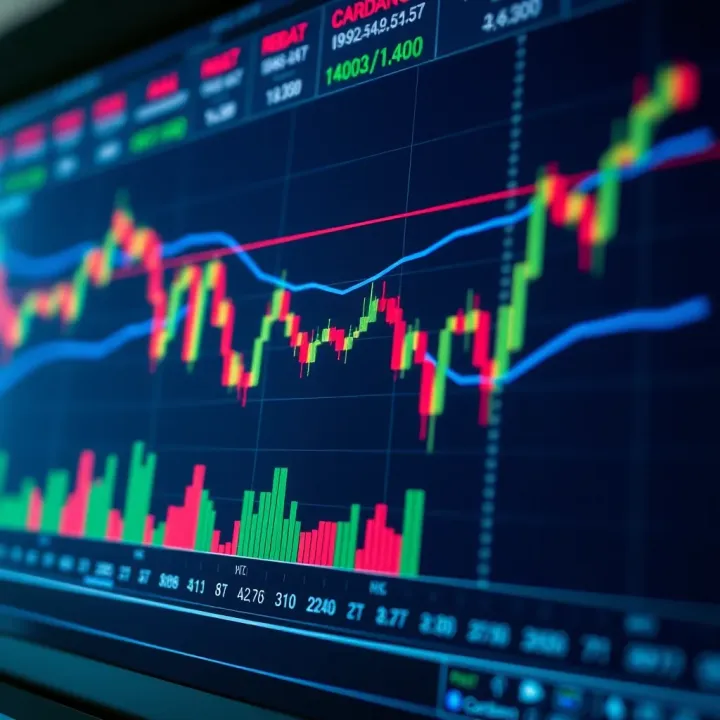
🔍 Explore ADA prediction basics and techniques to forecast Cardano prices📈. Learn key factors, risks, and tips for smarter crypto decisions💡.

📈 Understand gold rates in Pakistan, factors that affect pricing, market trends, and tips for smart buying. Stay informed to make wise gold investments! 💰
🔍 Understand binary trading in Pakistan with clear insights on strategies, risks, regulations, and tips to trade wisely and boost your success. 📊🇵🇰
Based on 9 reviews