
Will Gold Prices Rise Soon? Factors Affecting Pakistan's Market
📈 Curious if gold prices will rise soon? Explore key economic signals, geopolitical impacts, and market shifts shaping Pakistan's gold rates now.
Edited By
James Robertson
Gold has always held a special place in Pakistan, not just as a symbol of wealth but as a critical part of investment portfolios. Whether you're a seasoned trader tracking every market movement, an investor watching for the next big opportunity, or a newbie wanting to understand how gold pricing works, understanding the factors that affect tomorrow's gold rate is essential.
This article breaks down what actually drives gold prices up or down here in Pakistan. By the end, you’ll have a clearer picture of how local and global events shape the gold market and how to use this knowledge to your advantage.
Gold prices don’t move on a whim—they respond to a mix of economic signals, currency fluctuations, and market psychology. Grasping these elements can make a real difference when you’re planning your next purchase or sale.
We’ll also cover ways to keep an eye on these changes easily, helping you stay one step ahead without needing a degree in finance. So let's get right to it and see what's behind the scenes before you open your wallet tomorrow.
Understanding how gold pricing operates in Pakistan is essential for anyone interested in trading, investing, or simply tracking the value of this precious metal. Gold prices don't appear out of thin air; they're shaped by a mix of global trends, local market forces, and financial policies. This section sheds light on those mechanisms so readers can grasp why gold prices fluctuate daily and how this impacts their financial decisions.
Gold prices in Pakistan are closely tied to international gold rates, but they rarely mirror them perfectly. For example, if the international price for gold is up by $10 per ounce, the local price might not rise exactly by that amount due to currency fluctuations and local demand. This difference arises because gold in Pakistan is priced in Pakistani Rupees (PKR), while the international market prices gold in US Dollars (USD).
This means when the PKR weakens against the USD, gold prices in Pakistan can increase even if international gold prices remain steady. Traders and investors should, therefore, keep an eye on both global rates and currency exchange trends to predict tomorrow’s gold rate more accurately.
PMEX plays a vital role in setting gold prices within Pakistan. It operates as the country’s official commodities exchange where gold contracts are traded. Prices at PMEX are closely watched because they reflect real-time market supply and demand.
For instance, if a big influx of buyers appears overnight on PMEX, pushing up demand for gold contracts, this pressure will likely cause prices to spike. Conversely, if market confidence drops, sellers might flood the exchange, creating downward price pressure. PMEX offers transparent data, which helps traders and investors to make more informed decisions when predicting short-term price movements.
The broader global gold market influences Pakistan’s local gold rate significantly. For example, if there's political turmoil in the Middle East or if inflation fears rise in major economies like the U.S. or China, gold demand often surges as investors look for a safe haven. This tends to push international gold prices higher.
Since Pakistan imports most of its gold, these global price hikes trickle down to affect local pricing. Understanding ongoing global trends—such as central banks buying gold or shifts in investment patterns—can give a sneak peek into tomorrow's pricing.
The exchange rate between the Pakistani Rupee and the US Dollar holds a special place in shaping gold prices. Because gold is priced internationally in USD, when the Rupee loses value against the Dollar, it costs more Rupees to buy the same amount of gold. This typically means a rise in local gold prices, even if the international price remains stable.
For example, during periods when Pakistan’s currency struggles—say there's political instability or worsening trade deficits—the gold rate tends to climb. Investors often see gold as a way to protect their wealth from these currency risks.
Local supply and demand also steer prices. During wedding seasons or religious festivals, demand for gold jewelry spikes dramatically. Jewelers notice this consistently, usually stocking up well in advance.
However, if gold supply tightens due to import restrictions or increased customs duties, prices can climb even if demand remains steady. Conversely, if international prices drop and imports become cheaper, local sellers might reduce their asking prices to stimulate sales.
In Pakistan, gold isn’t just an investment; it's often a cultural asset tied to traditions. This unique demand dynamic causes local price fluctuations that might differ from global trends.
Understanding these local nuances helps traders and buyers time their decisions better, potentially saving money or maximizing profits.
In short, gold pricing in Pakistan boils down to a mix of international gold trends, currency exchange dynamics, the activity on PMEX, and local market forces. Grasping how these pieces fit together arms you with a better sense of what to expect for tomorrow’s gold rate, helping you avoid guesswork and make smarter financial choices.
Understanding what drives the gold rate for the next day in Pakistan requires a close look at several critical factors. These are not just random happenings but are deeply tied to economic realities and political developments. For traders and investors, knowing these influences can make the difference between a smart move and a costly mistake.
Inflation rates play a big role in pushing gold prices up or down. When inflation runs high, money loses value, which usually nudges folks toward gold as a safer store of value. For example, if inflation in Pakistan climbs beyond 10%, you might notice a jump in gold buying, causing its price to rise the next day. By keeping an eye on monthly inflation reports released by the Pakistan Bureau of Statistics, you get a decent forecast for gold price changes.
Interest rates and monetary policy decided by the State Bank of Pakistan also have a strong grip on gold prices. If the bank raises interest rates, people often park money in fixed deposits or government bonds, making gold a less attractive investment. Lower rates, on the other hand, reduce returns on these options and boost gold’s appeal as an alternative. For instance, when SBP cut rates in 2023, gold prices saw a noticeable uptick. Traders should track SBP announcements closely to catch these shifts.
Local political stability directly affects confidence in the economy. Pakistan's gold market reacts sharply if there's political unrest or uncertainty, such as election controversies or sudden government changes. When stability wavers, people tend to rush toward gold, considering it a safe haven during turbulent times. This often leads to a spike in gold demand and higher prices by the next trading day.
International geopolitical tensions also ripple through Pakistan’s gold market. Events like conflicts in the Middle East, US-China trade disagreements, or sanctions affecting major gold producers can disrupt supply chains and induce global uncertainty. This tension pushes investors worldwide toward gold, lifting prices everywhere, including Pakistan. An example is the price increase following heightened tensions in the Persian Gulf in early 2024, which sent gold soaring at local markets.
Being aware of these economic and political triggers helps traders and buyers make informed decisions, minimizing risks tied to sudden price shocks.
In a nutshell, tomorrow’s gold rate in Pakistan hinges on how inflation shakes up the currency value, how the central bank adjusts interest rates, and how both domestic and international political landscapes unfold. Following these key indicators can give you a practical edge in anticipating gold price movements.
Understanding how currency fluctuations affect gold rates is essential, especially in Pakistan where the economy is heavily influenced by foreign exchange movements. When the value of the local currency shifts, it directly impacts the price of gold, which is mostly traded in US dollars globally. This section sheds light on why tracking currency changes gives investors and traders an edge when anticipating tomorrow's gold price.
Currency moves don’t just happen in a vacuum; they reflect broader economic conditions, trade balances, and political moods. For example, a weakening rupee makes gold more expensive for locals because importers need more PKR to buy the same amount of gold priced in dollars. On the other hand, if the rupee gains ground, gold becomes relatively cheaper. Grasping these dynamics helps Pakistanis pick the right times to buy or sell gold, avoiding costly surprises.
Gold is priced worldwide in US dollars, making the dollar’s strength or weakness critical to local gold pricing. When the US dollar rises against other currencies, gold tends to become more expensive in those countries because you need more local currency to buy the same dollar amount of gold. For example, if the dollar strengthens against the Pakistani rupee, the gold price in PKR will increase even if the international gold rate remains stable.
Conversely, a weaker USD usually means gold is cheaper for buyers using other currencies. This currency pairing acts like a seesaw — when the dollar goes up, local gold prices climb, and when it falls, prices drop. Traders watching these moves can better predict the near-term shifts in gold rates without focusing only on global gold prices.
The PKR-USD exchange rate often tells a more immediate story of gold price changes in Pakistan because gold is imported mainly through dollar transactions. Small changes in the PKR/USD rate ripple through the market quickly. For instance, if the central bank adjusts interest rates causing the rupee to weaken by 0.5%, gold prices can rise by a similar margin overnight.
Understanding exchange trends also helps in spotting seasonal or event-driven patterns. During times of economic uncertainty or political unrest, foreign investors tend to move funds to safer currencies like the USD, weakening the rupee and pushing gold prices up. Keeping an eye on this exchange rate isn’t just for big institutional players; even small investors can time their purchases better by following daily forex volatility.
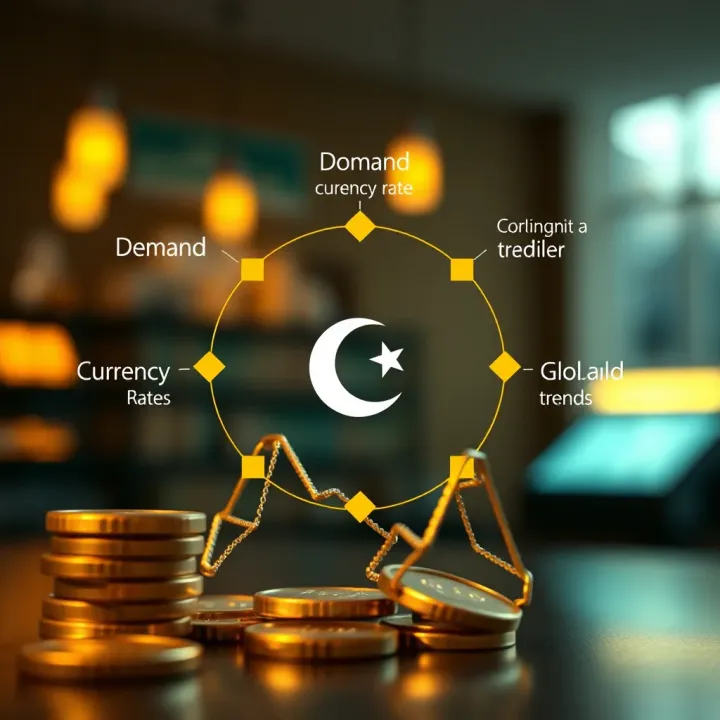
The rupee’s strength directly affects how much gold costs locally. If the PKR strengthens due to factors like increased foreign investment or positive trade balances, the cost of gold usually drops since it takes less rupee to match the dollar price. For example, after a recent surge in textile exports, the rupee gained some ground, leading to a slight dip in gold rates in the local market.
On the flip side, a weakened rupee, often caused by ballooning trade deficits or political instability, drives gold prices higher. This happens because importers must shell out more rupees per ounce to cover dollar costs. It’s like gold gets a hidden inflation tax that hits consumers when the currency struggles.
For savvy gold buyers, watching rupee movements offers a practical tool to anticipate price shifts. Even a small swing in the PKR can mean saving or losing thousands of rupees when purchasing gold jewelry or bars.
In summary, currency fluctuations are not just abstract numbers for traders and investors—they have real, tangible effects on gold prices in Pakistan. Understanding these patterns, especially the interplay between the US dollar and Pakistani rupee, equips anyone interested in gold markets with actionable insights to navigate tomorrow’s rates more intelligently.
Understanding market trends and historical data is a solid step to making sense of how tomorrow’s gold rate in Pakistan might move. It’s like watching the weather patterns before deciding whether to carry an umbrella—gold prices don’t just change on a whim; they follow patterns shaped by past events and recurring influences.
For traders and investors, spotting these trends helps avoid blind guesses. By analyzing historical prices, one can recognize when gold tends to peak or dip, and understand the underlying reasons, such as festivals or economic shifts, guiding smarter decisions.
Gold demand in Pakistan often goes through seasonal cycles. For instance, before wedding seasons in November and December, or during Eid celebrations, demand spikes as people buy jewellery and gifts. This surge usually nudges prices higher. Conversely, in months like July and August, demand typically slows down, resulting in relatively stable or lower prices.
This pattern isn’t just folklore—market reports from the Pakistan Mercantile Exchange (PMEX) consistently highlight these peaks and troughs. Keeping an eye on these seasonal shifts can help buyers and sellers time their moves better.
Looking at the past year, gold prices in Pakistan saw notable swings, mainly due to currency fluctuations and international market disturbances. For example, when the Pakistani Rupee dipped against the USD last autumn, local gold prices climbed sharply since gold is imported and priced in dollars.
Political unrest or global crises, like the ripple effects of the Russia-Ukraine conflict, also caused temporary jitters in gold rates. These moments illustrate how sensitive gold pricing is to sudden shocks and why keeping track of current events alongside historical data provides a clearer price picture.
To turn historical data into tomorrow’s predictions, analysts use several tools. Moving averages smooth out daily price noise, highlighting trends. For example, comparing a 30-day moving average with a 7-day one can indicate whether prices are on an uptrend or downtrend.
More advanced methods include regression analysis, which helps gauge the influence of different factors like inflation rates or US Federal Reserve announcements on local gold prices.
Even simple tools like charts with volume indicators give clues about market sentiment—high buying volume near support levels might indicate upcoming price rises.
While no method guarantees exact predictions, combining these statistical approaches with real-time news gives traders a better edge when estimating tomorrow’s gold rate.
By working with these data-driven insights, anyone involved in Pakistan’s gold market can reduce guesswork and make choices rooted in actual trends and patterns.
When it comes to keeping an eye on tomorrow’s gold rate in Pakistan, actually knowing where to look matters as much as understanding why the price shifts. Getting reliable, timely info isn't just for pros; anyone planning to trade or invest will find these methods handy. The gold market moves fast — minutes can make a difference — so practical ways to check rates become your best friends.
Being able to quickly access accurate gold prices helps avoid making decisions based on outdated or incorrect data. For instance, if you're thinking of buying some 22-karat gold jewelry or planning to sell earlier coins, knowing the latest rates can prevent you from losing out or getting shortchanged. Let’s dive into some reliable methods to track tomorrow’s gold rate.
In Pakistan, the government offers direct gold rate updates through websites affiliated with the State Bank of Pakistan or the Pakistan Mercantile Exchange (PMEX). These platforms typically provide the daily official gold price, reflecting both international market trends and local factors like currency exchange rates and taxes. The government’s data serves as a baseline, giving you an official figure that's hard to dispute.
For example, if the State Bank updates the gold price at 10 AM, this will incorporate recent currency movements and import duties, helping traders and consumers set expectations accordingly. Beyond accuracy, these sites often include historical rates, which can be a useful reference when identifying price patterns or planning purchases well in advance.
Checking these websites regularly can save you from falling for incorrect rumors or outdated prices that pop up on informal channels.
Portals like Bloomberg Pakistan, Business Recorder, or Dawn’s financial section generally keep a close watch on gold prices. They update rates frequently throughout the day, often with expert commentary explaining the whys and hows behind price movements. Unlike government sites, these portals assign some context around the numbers — like political events, global market shifts, or bargaining trends — which can be key if you want to understand price changes beyond the numbers.
Investors and beginners alike benefit from these updates since they showcase market sentiment and practical implications. For example, during the recent instability in currency values, these sites highlighted how gold rates surged as investors looked for safety, helping traders anticipate moves.
Local gold dealers often provide real-time pricing that reflects the supply-demand reality on the ground. These prices can slightly differ from international or government rates due to factors like local premiums, dealer margins, or immediate demand spikes. Keeping track of jewelers’ updates — either by visiting shops or through their websites and social media — can give you an inside edge.
For instance, Karachi’s Lala Gold and Silver Exchange often adjusts prices based on real intra-day transactions which can vary from official reported rates by a small margin. Watching these prices helps in negotiating better deals, especially since many buyers don’t realize retail prices shift as much as wholesale prices.
Besides numerical rates, understanding the local market mood is essential. Markets in cities like Lahore, Islamabad, or Faisalabad might experience different demand patterns; wedding season, festivals, or economic uncertainty will impact these regions differently. Talking to local goldsmiths or market players can shed light on upcoming price trends or better trading times.
For example, during Eid, gold sales spike, often pushing rates slightly higher due to increased demand. Knowing this, a trader might delay a sale until after the season tapers off to maximize returns.
Local market insights often fill the gaps left by formal data, giving you a practical feel of market pulses and hidden shifts.
In summary, by combining official sources, reputable news updates, and street-level info from jewelers and marketplaces, you create a well-rounded, practical way to keep track of tomorrow’s gold rate. This mix equips you to make informed choices, whether you’re diving into investment or just looking for the best deal on that next gold piece.
Navigating the gold market in Pakistan can be tricky, especially with daily price fluctuations. Having some solid tips for buying or selling gold around tomorrow’s rate can save you from regret and loss. It’s not just about guessing price changes; it’s about smart moves based on timing and trust. Whether you’re eyeing to buy a small pendant or sell your gold jewelry, knowing when and how to act makes a big difference in your returns.
Buying gold when the price takes a dip can be a golden opportunity—pun intended. Prices don’t move in a straight line, and dips often come after a market overreaction or short-term events that temporarily push prices down. For example, if international gold rates fell slightly due to a strong dollar or a political deal, local prices in Karachi or Lahore might also drop. That’s your moment to step in.
Besides watching global trends, keep an eye on local factors, such as PKR strength or government announcements about import duties. If you spot a sudden dip in gold prices on platforms like PMEX or trusted jewelers, take a closer look. But don’t rush—verify if the dip is temporary or part of a longer trend. Buying now could mean lower buy-in costs and potential gains if the price bounces back, since gold historically tends to rise over time.
Just like buying low, selling high is the dream scenario. The challenge is spotting the peak before it slips away. Peaks often coincide with heightened demand, like before Eid or wedding seasons when gold gift-giving surges. International scares or economic instability can also push prices up quickly, driving locals to cash in.
To capitalize, watch for signs like increased gold imports, media buzz about gold prices, or local jeweler alerts indicating price hikes. If prices have surged sharply without a fundamental long-term reason, it might be a good time to sell and lock in profits. But beware of greed—prices can fall suddenly too. Setting a target price based on recent trends helps you exit without second-guessing.
One of the simplest ways to avoid pitfalls is by double-checking the gold’s purity before buying or selling. Pakistan’s market has a wide range: 22-karat gold is common, but sometimes people get tricked into buying lower purity jewelry at higher prices. Always ask for a hallmark or assay certificate. Recently, digital gold certificates from companies like Karatbars or the Pakistan Mercantile Exchange offer more transparency.
Also, confirm the current gold rate from official sources like PMEX alongside your jeweler’s rate to avoid overpaying. Differences can happen due to making charges, but any excessive markup warrants suspicion. Don’t hesitate to bargain or walk away if the terms seem off.
Never underestimate the value of dealing with reputed sellers. Established jewelers with a physical presence, such as Al Fatah or Haji Sons, provide peace of mind and fairer deals compared to shady street vendors. Banks like Meezan and Habib also offer gold investment schemes if you prefer more formal channels.
For selling, avoid unlicensed gold-buying agents who might offer quick cash but less than market value. It’s safer to choose regulated outlets or auction platforms where gold prices reflect real market conditions. Always insist on a written receipt stating purity, weight, and price agreed to.
Buying and selling gold isn't just about the metal; it's about knowing when to act and with whom. Being cautious and informed can make your gold dealings rewarding, not regrettable.
By applying these tactics and staying alert to market movements, you’ll be better positioned to make sound decisions around tomorrow’s gold rates in Pakistan. Remember, it’s not luck but smart timing and careful verification that typically pay off.
Gold prices in Pakistan do not move in isolation; they are heavily influenced by what’s happening in the global gold market. Understanding this impact is key for traders, investors, and even everyday buyers trying to grasp why prices fluctuate from one day to the next. Changes abroad can quickly ripple through to Pakistan’s local market, affecting how much consumers pay and how investors position themselves.
This section explores how international developments shape Pakistan’s gold rates and offers practical insights to gauge tomorrow’s prices more accurately.
Whenever the US Federal Reserve (Fed) tweaks interest rates, it sends shockwaves through the gold market worldwide — including Pakistan. When the Fed raises interest rates, it often strengthens the US dollar and makes borrowing costlier, which tends to push gold prices lower because investors find stronger returns elsewhere. Conversely, if the Fed cuts rates or signals economic uncertainty, gold shines as a safe haven, driving prices up.
For example, in 2023, when the Fed hinted at pausing rate hikes, gold prices surged globally, and shortly after, Pakistan’s gold rates followed suit. Pakistani investors watching Fed announcements can better anticipate price swings. Every major Fed meeting should be on the calendar of anyone dealing with gold pricing in Pakistan.
Big players like China, India, and the US heavily influence global gold demand. When these countries ramp up buying — say during festivals or economic uncertainty — it boosts international prices. Pakistan often feels this impact because local traders adjust their rates to remain competitive and profitable.
For instance, during Diwali or the Chinese New Year, demand spikes in those countries push up global prices, which Pakistani buyers see reflected at local jewelers almost immediately. Monitoring these demand cycles helps predict short-term price jumps or dips.
It’s common for the gold price in Pakistan to differ slightly from international rates due to import costs, taxes, local demand, and currency fluctuations. Sometimes Pakistani prices run a bit higher simply because of customs duties or a weaker PKR against the USD.
To illustrate, if the international gold rate rises by $5 per ounce but Pakistani prices go up by more than that, it usually signals added local costs or stronger demand domestically.
Keeping an eye on these differences helps traders avoid surprises and make smarter buying or selling decisions. Being aware of these local factors alongside international prices gives a fuller picture of where tomorrow’s gold rate could land.
Understanding the interplay between international influences and local market conditions equips you to read the signals behind Pakistan’s gold price movements more effectively.
By tracking Fed policies, major economies' demand, and comparing local versus international prices, those involved in Pakistan’s gold market gain a clearer edge.
Government regulations are a big piece of the puzzle when it comes to understanding how gold prices move in Pakistan. These rules shape everything from how much taxes traders pay to how gold is imported and sold in the market, which in turn impacts gold's final price for everyday buyers and investors. For anyone keeping an eye on tomorrow’s gold rate, being aware of these legal and financial obligations is key to making informed decisions.
Customs duties add a layer of cost when gold is brought into Pakistan. The government charges these duties as a percentage of the imported gold's declared value. For example, if the customs duty is set at 5% and a trader imports gold worth PKR 10 million, there will be an extra PKR 500,000 added to their cost. This gets passed on to consumers, meaning the gold price goes up. It's useful to track any announcements about changes in customs duties since they can cause sudden shifts in gold pricing — making it important for traders and investors to monitor updates before making big moves.
Apart from customs duties, value-added tax (VAT) and sales tax also affect the final cost of gold. In Pakistan, a sales tax of around 17% is applicable to the sale of gold jewelry and bullion. This tax is usually embedded in the retail price, so buyers may not see it explicitly but should understand it's part of the overall cost. For those buying or selling gold, awareness of VAT helps to avoid surprises in pricing. For instance, a gold necklace priced at PKR 100,000 might effectively include around PKR 14,530 in sales tax, depending on the exact rates and exemptions. Knowing this helps in comparing prices and negotiating smarter.
Several government bodies oversee and regulate the gold trade in Pakistan. The State Bank of Pakistan (SBP) plays a central role in controlling gold imports and exports, setting guidelines to prevent illegal trade and money laundering. The Federal Board of Revenue (FBR) handles tax collection and customs duties on gold imports. Additionally, local authorities may enforce quality standards, making sure gold is accurately weighed and its purity verified. These bodies exist to maintain market integrity, protect consumers, and keep the gold business transparent. For traders, staying compliant with regulations from these entities is non-negotiable.
Compliance in the gold market includes following rules on proper documentation, paying applicable duties and taxes, and adhering to quality standards. Importers need to file correct paperwork showing proof of purchase, origin, and value of the gold. Jewelers must certify gold purity and provide receipts clearly stating tax charges. Non-compliance leads to penalties and can even result in confiscation of goods. For example, a trader importing gold without submitting complete customs documentation risks fines and delayed clearance. Understanding these requirements helps everyone from small jewelers to big investors avoid legal troubles and keep their operations smooth.
Staying informed about government regulations isn’t just legal housekeeping — it directly affects how gold prices fluctuate day-to-day in Pakistan. Being aware of customs duties, VAT, and the role of regulatory bodies can give you an edge when planning your gold trades or investments.
By keeping these government-related factors in check, you are better prepared to anticipate price movements and navigate the gold market with confidence.
📈 Curious if gold prices will rise soon? Explore key economic signals, geopolitical impacts, and market shifts shaping Pakistan's gold rates now.
📈 Explore gold price moves (XAU USD) driven by economy, politics & market trends. Tips on forecasting, risks, & trading for Pakistan traders 💰
Explore key factors driving today’s XAUUSD price, including economic data, geopolitics, and technical trends, tailor-made for Pakistan’s gold traders 📈💰
💵 Explore why the US dollar rate changes in Pakistan, covering economic shifts, global factors, policies, and market trends shaping the rupee value.
Based on 14 reviews