

Is Trading Halal or Haram? Understanding Islamic Views
Explore Islamic views on trading 🕌: Understand what makes financial transactions halal or haram in Pakistan, covering riba, gharar, intention, and speculation.
Edited By
Henry Lawson
Understanding whether trading on platforms like Expert Option fits within Islamic finance rules is a common concern for many Pakistani Muslims. Islamic finance forbids practices involving riba (interest), excessive gharar (uncertainty), and unfair speculation. This creates a complex backdrop for online trading, where rapid transactions and derivatives play a big role.
Expert Option is a popular online trading platform offering binary options, forex, and cryptocurrencies. It attracts many because of its user-friendly interface and the possibility of quick profits. However, Muslim traders often wonder if its features comply with halal trading concepts.

To grasp this, one must consider key Islamic finance principles:
Riba (Interest): Any guaranteed interest or fixed income without effort or risk is not allowed.
Gharar (Uncertainty): Excessive risk or ambiguity in contracts is prohibited, as seen in highly speculative trades.
Maysir (Gambling/Speculation): Trading based purely on chance resembles gambling, which Islam forbids.
Expert Option’s structure, especially binary options, is sometimes viewed with suspicion because it involves short-term bets on price movements. This can resemble gambling more than investing. Moreover, leverage and fixed expiry times on trades increase risk levels that might fall under gharar.
That said, not all online trading is inherently non-compliant. Many Islamic scholars accept trading of tangible assets or shares if done transparently, without interest or gambling elements. For example, trading in underlyings that have real economic value, like shares of companies listed on Pakistan Stock Exchange (PSX), usually passes Islamic scrutiny.
Pakistani traders considering Expert Option should:
Identify the nature of assets being traded.
Avoid products with interest-bearing components.
Ensure transparency in contract terms and avoid uncertain outcomes.
Deciding if Expert Option is halal depends largely on how the platform is used and which instruments are traded. Consulting knowledgeable Islamic finance scholars can provide tailored advice.
This introduction sets the stage for a detailed look at Islamic finance rules alongside Expert Option’s features, aiming to help Pakistani Muslims make informed decisions about halal online trading in today’s digital world.
Understanding Expert Option is essential before deciding whether it aligns with Islamic finance principles. This platform has gained popularity among traders for its user-friendly interface and quick trade execution. However, its unique features and methods of trading can raise questions regarding their compatibility with halal investment rules.
Expert Option offers a range of trading instruments including binaries, forex pairs, commodities, cryptocurrencies, and indices. For instance, traders can invest in gold prices or currency pairs like USD/PKR. This variety allows users to diversify their portfolio but also means different risk levels and trading dynamics need consideration.
Transactions on Expert Option are typically executed through contracts based on price movements within set timeframes. When you select an asset and predict its price direction, the platform accepts your trade and settles gains or losses at contract expiry. This immediate settlement contrasts with traditional investment where ownership of the asset changes hands.
Expert Option operates under financial licences from authorities like the Vanuatu Financial Services Commission, but this regulatory oversight is less stringent compared to major international bodies such as the FCA or SECP. While the platform uses encryption to secure user data and funds, traders should exercise caution and verify the platform's compliance status, especially considering the legal complexities of online trading in Pakistan.
Binary options are contracts where traders predict whether an asset's price will rise or fall within a short timeframe. The outcome is a fixed return if the prediction is correct or a total loss otherwise. For example, betting Rs 10,000 that Bitcoin’s price will be higher in 10 minutes may yield Rs 18,000 if right, but lose the entire stake if not. This all-or-nothing nature distinguishes binary options from other forms of trading.
Common strategies include trend following, where traders buy or sell based on recent price movements, and range trading, betting prices stay within a band. Some also apply martingale, doubling stakes after losses to recover. However, many strategies involve high risk and require solid market knowledge to avoid heavy losses.
Trades on Expert Option can last from 30 seconds to several hours. Shorter timeframes bring higher volatility and risk, as prices fluctuate rapidly due to market news or sentiment changes. For Pakistani traders, timing is crucial, especially during periods of market uncertainty or local economic events that impact global markets.
Expert Option's fast-paced trading offers potential gains but also increases exposure to risk, making understanding its mechanism vital for practising halal and responsible trading.
This foundation helps evaluate Expert Option's compatibility with Islamic finance standards covered in later sections.

Understanding Islamic finance principles is essential for any Muslim trader looking to engage in online platforms like Expert Option. These principles help ensure that trading activities comply with Shariah law while promoting ethical and fair financial dealings. In particular, concepts like riba (interest), gharar (excessive uncertainty), and the distinction between speculation and genuine investment form the backbone of what counts as halal trading.
Definition of riba: Riba refers to any guaranteed interest or profit on a loan or investment, considered exploitative and unjust in Islamic law. For example, charging fixed interest on lending money is classic riba. Such practices transfer wealth unfairly from one party to another without real economic activity, which Islam prohibits.
Interest in conventional trading versus Islamic finance: Most conventional trading platforms or financial instruments embed interest, either overtly through interest-bearing loans or covertly via rollover or swap charges. Islamic finance avoids these interest-based elements by employing profit-and-loss sharing, leasing, or fee-based contracts. Traders must ensure that any gains come from legitimate trade and asset ownership, not artificial interest payments, to stay within halal boundaries.
Explanation of gharar: Gharar means excessive uncertainty or ambiguity in a contract or transaction. For instance, if a buyer agrees to purchase a product without knowing its full condition or quality, this represents gharar. Islamic law calls for clarity in all terms to avoid disputes or unjust enrichment.
Why excessive uncertainty matters in Islam: Transactions full of gharar are seen as risky ventures bordering on gambling because the parties lack clear knowledge of the deal's outcome or specifics. For example, trading products or contracts with unclear terms or unknown underlying assets introduces gharar. This is problematic since Islam promotes financial activities that are transparent and just.
Difference between gambling and trade: Islam distinctly separates maysir (gambling) from legitimate trade. Gambling relies purely on chance without any productive economic activity, whereas trade involves buying and selling with due diligence and actual ownership. For example, betting on coin toss results is gambling, while purchasing goods to sell later is trade.
How speculation is viewed: Speculation often resembles gambling when traders take high risks with uncertain outcomes purely for quick profits. Islamic scholars generally discourage such behaviour as it fosters unfair risk-taking and may harm market stability. Practical halal investment emphasises informed decision-making and real asset involvement rather than speculative bets.
In short, traders seeking to comply with Islamic principles must avoid interest-based dealings, ensure clarity in contracts to minimise gharar, and focus on genuine investment rather than gambling or excessive speculation.
These principles guide Muslims in evaluating platforms like Expert Option and deciding if their features align with halal trading practices.
Assessing Expert Option through the lens of Islamic finance is essential for Muslim traders who want to ensure their investments comply with Shariah principles. This evaluation focuses on core concerns such as riba (interest), gharar (excessive uncertainty), and speculation, all of which have direct implications for whether trading activities are considered halal. By breaking down these elements, Pakistani traders can better identify risks and align their trading practices with Islamic law.
Assessment of interest elements: Riba, commonly understood as interest or usury, is strictly prohibited in Islam due to its exploitative nature. In many conventional financial platforms, interest appears through mechanisms like overnight fees or rollover charges. Expert Option, however, is a binary options platform where trades are typically short-term contracts; it does not explicitly charge interest on deposits or loans. Still, the question remains whether any trade-related returns are effectively interest in disguise, such as guaranteed or fixed returns.
Comparison with Islamic contracts: Islamic contracts like mudarabah (profit-sharing) or murabaha (cost-plus financing) explicitly prohibit interest, focusing on genuine risk-sharing. Expert Option’s structure mainly involves betting on asset price movements within fixed intervals, rather than sharing actual business risks or profits generated by economic activity. This lack of partnership or asset backing distances it from the principles that underpin valid Islamic contracts. Hence, while Expert Option may not apply classical interest, it lacks the reciprocal risk and reward balance central to Islamic finance.
Volatility and uncertainty in binary options: Gharar refers to excessive uncertainty or ambiguity in contracts, particularly when the outcome is unclear or subject to chance. Binary options trading is known for high volatility; traders bet on price directions with outcomes decided within minutes or hours. This inherent unpredictability results in significant uncertainty about gains or losses at the time contracts are entered, raising red flags under Islamic law.
Risk disclosures and how they affect gharar evaluation: While Expert Option provides disclaimers about the risks of trading, mere disclosure does not eliminate gharar. Islamic jurisprudence emphasises eliminating ambiguity itself, not just informing parties about it. If a transaction's outcome heavily depends on chance or speculation, risk disclosures alone cannot make the trade halal. Practical relevance here is that Pakistani traders should view the transparency of risk as necessary but insufficient for compliance.
Trading motives and strategy realism: A key distinction in Islam exists between speculation (which is like gambling) and investment (which involves purposeful engagement with productive assets). On Expert Option, many trades resemble pure speculation, aiming to profit from short-term price swings without owning underlying assets. Realistic strategies aiming at long-term value creation are rare on such platforms, as the focus is more on quick wins.
Islamic viewpoints on speculative practices: Islamic scholars generally discourage or prohibit excessive speculation because it resembles gambling (maysir), which is haram. However, some educators acknowledge that certain levels of market prediction may qualify as permissible if based on knowledge and avoiding unjust gain. In the case of Expert Option, the dominance of high-risk bets with uncertain outcomes leans toward speculation rather than genuine investment, which is problematic under Islamic rulings.
Understanding these evaluations helps Pakistani Muslims decide whether Expert Option aligns with their religious and ethical standards before risking their money. Taking account of riba, gharar, and speculation paints a clearer picture of the risks involved and guides toward more compliant trading choices.
Scholarly opinions and fatwas hold significant weight in determining the permissibility of online trading platforms under Islamic law. For Pakistani Muslims navigating digital investment options like Expert Option, understanding these religious rulings provides clarity and helps avoid practices considered haram. Scholars evaluate such platforms based on core Islamic finance principles such as the prohibition of riba (interest), gharar (excessive uncertainty), and gharar's connection with speculation.
Different scholars have issued fatwas addressing binary options, often classifying them under gambling due to their speculative nature and lack of underlying asset ownership. For example, bodies like the Islamic Fiqh Academy of the Organisation of Islamic Cooperation have highlighted concerns about the gambling element inherent in binary options where traders bet on price movements within tight timeframes without actual trading of goods or services.
On the practical side, some scholars have permitted online trading only if the transactions avoid interest, excessive uncertainty, and gambling-like characteristics. This nuanced view reflects the diversity in juristic interpretation influenced by transaction structure and trader behaviour.
Consensus among Islamic scholars usually rejects binary options as compliant with Shariah due to their speculative and risky nature. However, disagreements arise from variations in platform mechanisms and contract transparency. Some argue that with proper safeguards, certain forms of online trading might be permissible, especially if linked to real asset trading and devoid of riba.
This divergence underscores the need for Pakistani traders to consider fatwas carefully and not rely solely on platform claims, focusing instead on clear Islamic-compliant frameworks.
For Pakistani Muslims seeking to trade online while adhering to Islamic principles, compliance means selecting platforms that strictly prohibit interest and gambling features. They should review terms and conditions carefully for any clauses involving interest or uncertainty.
Practical tips include opting for platforms offering Islamic accounts (swap-free trading), conducting thorough research on the platform’s regulatory status, and consulting local Islamic finance scholars or trusted advisory bodies. Adopting a conservative approach to risk, such as avoiding highly speculative products, aligns well with halal trading values.
Traders should prioritise Shariah-compliant financial instruments and consistently seek scholarly advice to ensure their investments remain halal, particularly in fast-evolving areas like online trading platforms.
Through such guidance, Pakistani Muslims can confidently approach digital trading with both financial acumen and religious compliance in mind.
For Pakistani traders concerned about the permissibility of trading on platforms like Expert Option under Islamic law, exploring alternative options is vital. These alternatives focus on eliminating elements of riba (interest), gharar (excessive uncertainty), and gambling, common concerns in online trading. Choosing platforms and instruments aligned with Shariah helps ensure compliance while still allowing participation in financial markets.
Islamic forex accounts are specially structured trading accounts complying with Shariah principles. They avoid interest charges and swaps, common in conventional forex trading, by offering "swap-free" accounts. This means no overnight interest is charged or earned, which addresses the prohibition of riba in Islamic finance. Traders using these accounts can participate in currency trading without falling into forbidden interest transactions.
Popular Islamic trading platforms often provide clear terms and ensure trades involve actual assets rather than speculative contracts. For example, some brokers operating in Pakistan offer Islamic forex accounts with easy deposit and withdrawal options through local payment gateways like JazzCash and Easypaisa. These platforms also maintain transparent fee structures to avoid hidden charges that may conflict with Islamic law.
The Pakistan Stock Exchange (PSX) incorporates Shariah screens to separate halal stocks from non-compliant ones. These screens exclude companies involved in alcohol, gambling, pork, conventional financial services charging interest, and other prohibited sectors. Investors looking for halal options can focus on stocks passing these filters, ensuring their portfolios meet Islamic ethical standards.
Locally, several mutual funds and exchange-traded funds (ETFs) are Shariah-compliant, providing easier access for retail investors. Funds like Meezan Islamic Fund and Al Meezan Investment Management’s ETFs focus on Shariah-approved stocks and exclude companies engaging in riba or excessive uncertainty. Investing in these funds offers Pakistani Muslims a halal way to grow their capital while supporting the local economy.
Choosing halal trading alternatives not only aligns with Islamic values but also promotes financial discipline and risk awareness. This approach helps investors avoid speculative traps and adhere to ethical investing principles.
By considering Islamic forex accounts and Shariah-compliant equity investments, Pakistani traders can navigate financial markets more confidently, ensuring their investments remain halal while still seeking profitable opportunities.
Navigating online trading platforms like Expert Option requires careful attention to ensure trading remains halal according to Islamic principles. Pakistani traders must actively check platform terms, seek expert guidance, and adopt conservative strategies to manage risks effectively. These steps help avoid forbidden elements such as riba (interest), excessive gharar (uncertainty), or gambling-like speculation.
Reviewing contracts for interest or prohibited clauses is essential for halal compliance. Traders should scrutinise the platform’s user agreement and terms of service to identify any mention of interest charges, fees based on deferred payments, or products that resemble conventional financial contracts forbidden in Islam. For example, some platforms may impose overnight or swap fees that function like riba, which would render trading non-permissible. Understanding these clauses protects traders from inadvertently participating in non-Shariah compliant transactions.
Verifying regulatory oversight is another key factor. Platforms regulated by recognised financial authorities provide some assurance regarding transparency and fairness, although regulation alone doesn’t guarantee halal status. In Pakistan, traders are advised to prefer platforms that comply with local laws authorised by the Securities and Exchange Commission of Pakistan (SECP) or international regulators well-known for strict standards. This oversight reduces the risk of hidden charges or deceptive practices. However, beyond regulation, individual contract analysis remains necessary.
Where to find credible advice is crucial for Pakistani traders uncertain about halal trading. Reputable Islamic finance scholars or Shariah advisors connected to local Islamic banks and financial institutions can provide reliable rulings tailored to current online trading products. Universities offering Islamic finance courses or certified Shariah boards that publish fatwas on financial matters also serve as trustworthy sources for consultation.
Questions to ask for personal assessment include inquiries about whether a specific trading instrument involves riba, deals with undue gharar, or amounts to gambling. Traders should request guidance on how to discern between halal investment and prohibited speculation. Asking how to interpret platform terms, evaluate risk levels, and manage profits ethically ensures informed decisions aligned with Islamic law.
Risk management strategies such as limiting exposure to volatile or unclear assets help avoid gambling-like conditions forbidden in Islam. Pakistani traders should diversify trading portfolios, set strict stop-loss limits, and avoid chasing quick profits. This cautious stance aligns with Islamic teachings that discourage unjust uncertainty or harm.
Using only halal financial instruments means selecting trading options compliant with Shariah standards—such as Islamic forex accounts without swap fees or investing in Shariah-screened stocks on the Pakistan Stock Exchange. Avoiding binary options or margin trading that involve interest payments or excessive speculation contributes to halal trading practices.
Pakistani Muslims engaged in online trading must take active, informed steps to ensure their investments comply with Islamic principles. Monitoring contracts, seeking qualified advice, and applying conservative risk measures together form the best approach to halal trading in the digital age.
Explore Islamic views on trading 🕌: Understand what makes financial transactions halal or haram in Pakistan, covering riba, gharar, intention, and speculation.
Explore if binary trading is halal or haram in Islam 📊✨. Understand Islamic rules, scholars’ views, risks, and ethical tips for Muslim traders in Pakistan 🇵🇰.

Explore Islamic views on binary trading 📉💰 to understand if it's halal or haram. Learn risks, ethics, and expert opinions for Muslim investors.
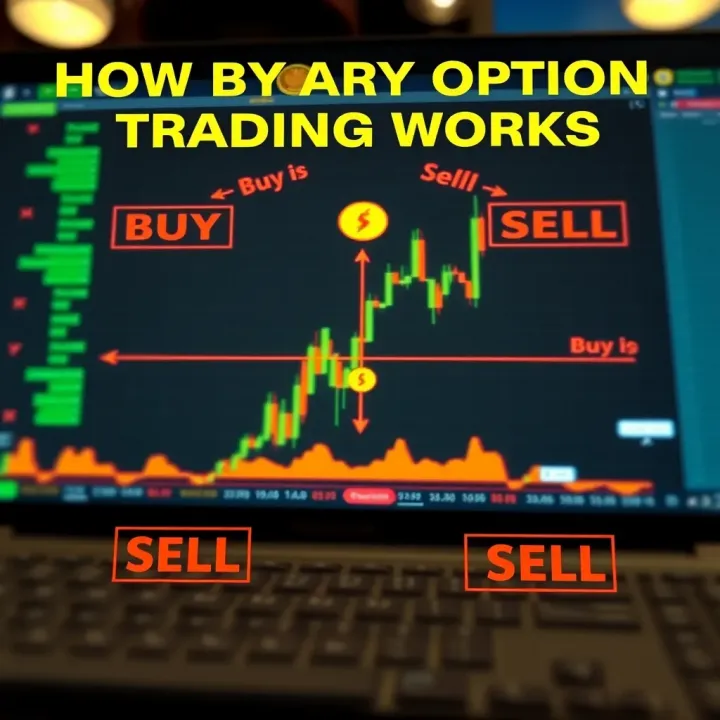
📈 Explore practical tips on binary options trading in Pakistan. Learn how it works, spot risks, and apply strategies for smarter trades with confidence.
Based on 13 reviews