
Understanding Trade Accounts in Pakistan
📊 Discover how trade accounts work in Pakistan—learn types, setup steps, regulations, benefits, and risks to trade smartly in local markets.
Edited By
James Collins
Trade isn’t just about moving goods or services from one place to another. It’s a complex web of exchanges that shape economies and influence policies. Visualizing these networks through trade graphs can offer a clearer picture of this dynamic flow, especially for a country like Pakistan, where understanding trade patterns matters for economic growth and planning.
Trade graphs map out connections between countries, showing who’s trading what, and in what volume. By breaking this down visually, it becomes easier to spot trends, dependencies, and opportunities. Whether you’re an investor weighing market entry, a trader tracking goods, or an educator explaining global economics, trade graphs serve as a practical tool.
This article will cover the basics — what trade graphs are, how to read them, and their relevance to Pakistan’s unique trade environment. We’ll look at components like nodes and edges, how data is represented, and how these visuals can help make informed economic decisions. Stick around if you want to see trade in a new light and get some hands-on insight into the flow of goods and services that link Pakistan to the world.
Trade graphs are powerful tools used to visualize how goods and services circulate between countries or regions. Instead of just numbers in tables or reports, these graphs transform trade data into a clear picture, making it easier to spot trends, key players, and imbalances. For anyone involved in trading, investing, or analyzing economies—especially in a complex trade environment like Pakistan's—understanding trade graphs is a game changer.
A trade graph essentially breaks down the exchange of products or services into visual components, which quickly tell a story about the economic relationships. This is not just about seeing who trades the most but understanding the nuance of trade flows—like which countries depend on others or where bottlenecks might form if a major route faces disruption.
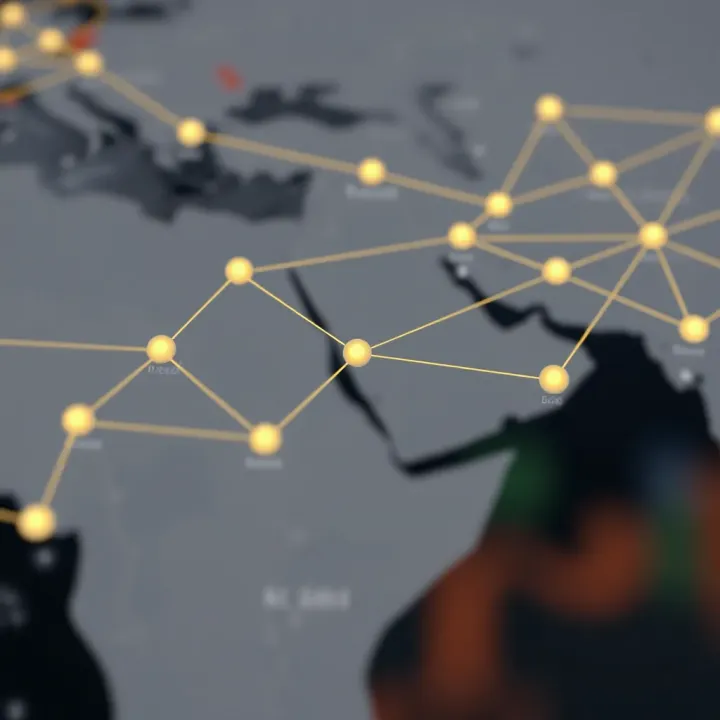
At its core, a trade graph is a network illustration where nodes represent countries or trading entities, and the connections—called edges—indicate trade relationships. The purpose is simple: to make the complex mesh of international trade easier to analyze and understand. Instead of sifting through long spreadsheets filled with export and import values, trade graphs offer an instant snapshot.
Imagine you’re looking at Pakistan’s trade with China. Rather than just knowing the total dollar amounts, a trade graph shows not only the volume but also the direction of trade flows, making it clear who’s exporting what, and how significant that relationship is against others.
Nodes are the points on the graph, usually representing countries, customs regions, or major trading cities. Edges are the lines connecting these points—they symbolize the trade relationships. Without nodes and edges, you just have isolated data points. Together, they form the skeleton of the whole system.
In practical terms, for Pakistan, a node might be Karachi port, linked to nodes like Dubai or Shanghai. The edges show the trade routes, which can highlight Pakistan’s reliance on specific markets or ports.
Trade doesn’t just happen; it moves from exporter to importer. Directional flow features arrowheads on edges indicating the flow of goods or services from one country to another. This makes a big difference in analysis because knowing who sends goods versus who receives them matters deeply.
For example, Pakistan might export textiles to the UK and import machinery from Germany. The arrows tell you the direction — Pakistan to UK for exports, Germany to Pakistan for imports—helping to understand dependencies better.
Edges in a trade graph often have weights, meaning they indicate the volume or value of trade. This can be shown by the thickness of the lines or numbers attached to them. Such weighted edges highlight the economic size of each trade relationship.
If Pakistan’s exports to China are worth $5 billion, compared to $500 million to a smaller trading partner, the edge to China will be thicker or more prominent. This instantly draws attention to significant partnerships.
Understanding these basic parts — nodes, directional flows, and weights — is essential before diving deeper. Each element turns raw data into a story that can guide smarter trade decisions or policy formulation.
In summary, trade graphs offer a straightforward yet powerful way to visualize economic exchange, making it easier for traders, analysts, and policymakers to grasp the dynamics at play, especially in a trade-dependent economy.
Different types of trade graphs offer distinct lenses through which economic exchanges can be understood. Picking the right type depends on the analytical goal, data availability, and the granularity needed. For instance, whether you want to look at a simple exchange between two countries or a more complex network involving multiple players, the type of trade graph matters. It’s like choosing the right map for a road trip—you wouldn’t use a city map to navigate a whole country.
Bilateral trade graphs focus on trade relationships between two entities, typically countries. They show the flow of goods or services from one country to another and vice versa. This type of graph is especially useful when a trader or analyst wants to zoom in on a particular relationship. For example, visualizing the trade flow between Pakistan and China can highlight which commodities dominate their exchange and reveal any imbalances.
Think of bilateral graphs as one-on-one conversations—they tell you exactly how much is being exchanged back and forth. These graphs typically have two nodes connected by one or two directional edges to signal export and import volumes. Traders might use this format to negotiate deals or assess tariff impacts on specific pairs.
Stepping up the complexity, multilateral trade graphs represent trade connections across many countries simultaneously. Instead of just focusing on two sides, these graphs illustrate a network of nodes (countries) interconnected by edges that represent trade flows. This setup helps to identify broader patterns, like how a shock in one country’s export market might ripple through multiple trade partners.
For example, a multilateral graph could map Pakistan’s trade with key partners like the United States, UAE, and India all at once. Observing such a web may reveal which partners form the backbone of the economy or help spot potential vulnerabilities—say, if Pakistan relies heavily on a handful of countries for imports.
Trade graphs come in two flavors: weighted and unweighted. Weighted graphs provide more detail by assigning values to edges—these weights usually correspond to trade volumes or monetary value. Unweighted graphs simply show whether a connection exists or not, with no information on size or intensity.
Weighted graphs are incredibly practical for decision-makers who need to understand not just who trades with whom, but how much. For example, a weighted multilateral graph can highlight Pakistan’s biggest export destinations by thicker, bolder lines, making it visually obvious where most goods are moving.
On the other hand, unweighted graphs might be useful for a quick snapshot of trade presence or diversity without worrying about scale. They can help identify emerging trade relationships or gaps in connection networks.
Understanding the differences between these graph types enables you to pick the best tool for your specific trade analysis, revealing deeper insights and helping shape smarter economic strategies.
Understanding how to interpret trade graphs is more than just a skill for economists or analysts—it's key for traders, investors, and even educators aiming to grasp global economic ties. Trade graphs break down complex trade relationships into visual, digestible pieces, helping us see who trades what, and with whom. This clarity matters when you want to make informed decisions, spot risks, or identify growth opportunities.
Trade volume indicates the quantity or value of goods and services flowing between countries, while the direction specifies who is exporting and who is importing. In a trade graph, this is often shown through weighted arrows pointing from one node (country) to another. For example, a thick arrow from Pakistan to China might reflect substantial textile exports. Watching these arrows helps pinpoint major trade flows and seasonal or market-driven shifts.
For instance, during certain years, Pakistan’s large exports of rice to the UAE create heavy directional flows from Pakistan to that region. Tracking these volumes over time reveals trends and potential pressure points, such as overreliance on a single market.
Trade graphs clearly highlight which countries hold the most significance in a trading network by showing nodes with many connections or sizable edges. For Pakistan, major trade partners like China, the UAE, and the USA stand out as large, well-connected nodes. These partners often dominate a country's trade activity, shaping everything from tariff policies to logistics choices.
Knowing the key players is vital for diversifying trade portfolios. If a graph reveals Pakistan heavily leans on one partner, it might be a wake-up call to explore new markets or strengthen relations with existing ones. For example, increasing connections with countries in Southeast Asia might offer Pakistan fresh export avenues beyond traditional partners.
Trade imbalances appear in graphs when one directional flow heavily outweighs the reverse. Imagine Pakistan importing far more machinery from Germany than it exports there; this would show as a thick arrow pointing towards Pakistan but a thin one going back. Such imbalances can indicate dependency and vulnerability to market or policy shifts.
Recognizing these dependencies early can guide policymakers and businesses alike. If Pakistan relies heavily on imports for key industrial equipment, disruptions in that supply chain—due to tariffs, political tensions, or global crises—could stall production. Graphs that reveal these dependencies support efforts to build resilience, such as boosting local manufacturing or finding alternative suppliers.
Interpreting trade graphs is like reading a map of economic relationships. They don’t just show who exchanges goods, but reveal the health, dependencies, and opportunities within trade networks.
By mastering these interpretation skills, anyone involved in or studying trade gains a sharper, clearer view of the global play, helping direct strategies and decisions with confidence.
Data is the backbone of any trade graph. Without accurate and reliable sources, the visualizations would be little more than guesswork. Accessing the right data helps create graphs that truly reflect the flow of goods and services between countries or regions. This makes it easier for traders, analysts, and policymakers to identify patterns, spot opportunities, and also notice risk areas.
When building trade graphs, it's important to rely on consistent, updated, and detailed data to capture the dynamics of economic exchanges. At this stage, the choice of data directly affects the graph’s accuracy and usefulness.
Customs data is one of the most direct and granular sources available. It records every shipment of goods crossing borders, detailing what items were traded, in what quantities, and along which routes. This raw data allows for a precise mapping of trade flows and volumes.
For example, Pakistan’s Federal Board of Revenue collects customs data on all imports and exports. Analysts can use this to chart exactly how much textile machinery or rice is moving in or out. Customs data tends to be updated almost continuously, giving very recent snapshots of trade activities. It’s particularly helpful when you want to dig into specifics, such as identifying a sudden spike in electronic imports or a decline in steel shipments.
Government trade reports compile and summarize data collected from customs and other agencies. These reports often present trade statistics in a more accessible, cleaned format, including aggregated trade volumes, values, and trends.
Pakistan’s Ministry of Commerce regularly publishes these reports, providing insights like trade balance summaries and sector-wise export performance. For users less interested in raw data but more in trends and analyses, these reports are goldmines. They also often include policy context that explains why certain trade shifts occur, making interpretations of trade graphs more meaningful.
The World Bank offers a rich database of trade data, with an emphasis on development indicators tied to trade flows. Their datasets include both goods and services trade, often standardized for cross-country comparison. They are great for seeing Pakistan’s trade metrics in a global context, such as how its export volumes compare to neighboring countries.
World Bank data is regularly updated and vetted for consistency, making it reliable for constructing multilateral trade graphs. It also includes metadata, like economic parameters, that can enrich your graphs by correlating trade patterns with GDP growth or poverty rates.
The International Monetary Fund provides trade data mainly through its Direction of Trade Statistics. This resource focuses on bilateral trade flows and offers timely figures for many countries. It’s particularly useful when you want to examine specific trading partners, for example, Pakistan’s trade relationship with China or the Gulf nations.
IMF data is known for its coverage and timeliness, which helps track shifts in trade ties caused by economic or political events. Importantly, it provides detailed trade values that can be used to weight edges in trade graphs, reflecting real economic weight.
For a comprehensive and detailed repository, UN Comtrade is often the go-to. It contains harmonized trade data reported by more than 170 countries. One can access detailed commodity-level data that makes trade graphs rich with product-specific flows.
For example, using UN Comtrade data, an analyst can break down Pakistan’s exports into textiles, chemical products, and machinery, showing the intensity and directions of these trades separately. This granularity helps pinpoint where export strengths or vulnerabilities lie.
When choosing data sources for trade graphs, pay attention to update frequency, level of detail, and coverage. Combining official statistics with international databases often gives the most balanced and insightful picture.
In practice, merging these data sources could mean starting with Pakistan’s customs figures, then supplementing with IMF data to capture exports not handled at official border points, and finally using World Bank or UN Comtrade for broader regional comparisons. This mix ensures the trade graphs are not just accurate snapshots but also rich narratives of economic exchange.
Trade graphs serve as more than just pretty pictures on a screen—they’re powerful tools that shine a light on the inner workings of economic exchange. For traders, investors, and analysts in Pakistan, understanding these visualizations can make a world of difference. By clearly mapping out who’s trading with whom, in what quantities, and in which directions, trade graphs help spot trends, weak spots, and opportunities for better decision-making.
One key use of trade graphs is to monitor export and import flows over time. For instance, Pakistan’s textile exports to countries like the USA, China, and the UAE can be visualized to observe seasonal spikes or dips. This kind of insight helps businesses anticipate demand cycles or supply chain interruptions, rather than flying blind.
Consider a scenario where trade nodes representing textiles shipments grow larger and connections thickening between Pakistan and certain countries, indicating a boost in export activity. Conversely, if the graph shows shrinking edges with a major import partner like China, it might hint at declining imports of machinery or raw materials, prompting stakeholders to investigate the cause.
This level of detail is invaluable for traders aiming to optimize inventory or for government officials managing trade balances.
Trade networks are rarely fault-proof, and trade graphs reveal the exact weak spots in the system. By mapping dependencies, analysts can identify if Pakistan relies heavily on a handful of countries or a single export commodity, which could spell trouble if disruptions occur.
For example, a dense cluster of connections funneling through one major trading partner, say China, might indicate a bottleneck. If political tensions or logistic delays arise, Pakistan’s supply chain could face significant setbacks. A well-constructed trade graph makes such vulnerability glaringly obvious, allowing policymakers to consider diversification strategies.
Understanding these vulnerabilities isn’t just about risk avoidance. It’s also a chance to spot alternative connections that have been overlooked, like emerging trade links with Southeast Asian markets.
Trade graphs equip decision-makers with a bird’s-eye view of Pakistan’s trade ecosystem, facilitating smarter policy choices. When examining trade tariffs, for example, policymakers can use graphs to see which sectors invite the most foreign exchange or those stifling growth.
Suppose the government considers adjusting tariffs on imported electronics. Trade graphs displaying import volumes and partner countries like South Korea or Japan can help predict the impact. This prevents sweeping policies that might unintentionally choke off vital supply sources or harm local businesses dependent on those imports.
Moreover, these visual tools can track the effects of implemented policies over time, comparing pre- and post-policy trade volumes visually and quantitatively. These evaluations aid in fine-tuning trade agreements or bilateral negotiations.
In short, trade graphs turn complex trade data into straightforward visuals that inform strategy, prevent blind spots, and open doors to new opportunities.
By actively incorporating trade graphs in economic analysis, Pakistan’s stakeholders—from exporters and investors to government officials—stand better equipped to navigate the highs and lows of international trade with solid, data-backed insights.
Trade graphs are especially helpful for visualizing Pakistan’s trade ecosystem, showing how goods and services flow between Pakistan and its global partners. These graphs clarify which countries play big roles in Pakistan's exports and imports, making it easier for analysts and policymakers to identify patterns that might otherwise get lost in raw data.
By mapping trade relationships visually, trade graphs shed light on Pakistan’s economic strengths and vulnerabilities. For example, Pakistan exports textiles heavily to China and the US. A trade graph immediately shows these thick, frequent connections versus smaller, less frequent ones to other nations. This kind of visual cue helps pinpoint where Pakistan depends on certain markets and where diversification might be needed.
Pakistan’s main trading partners include China, the United States, the United Arab Emirates, and the European Union. Trade graphs put these relationships front and center, illustrating not just who trades with whom but also the volume and direction of this exchange.
For instance, the thick edge from Pakistan to China on a weighted graph illustrates large textile exports, while the edge back from China to Pakistan might be thinner, showing fewer goods imported from there.
Visualizing these partners helps traders and investors understand market dynamics at a glance. It reveals where Pakistan is strongest—like cotton textiles with the US—and where it imports critical resources, like oil from the UAE.
Trade graphs also map out specific export and import corridors. Pakistan’s major export routes run through ports like Karachi and Gwadar, facilitating large shipments to China, the Middle East, and Europe. The import routes often show oil and machinery flowing in from the Gulf and China.
Highlighting these routes in graphs can spot bottlenecks and identify opportunities for infrastructure investment. For example, a congested or overused route could show up with heavy trade flows, suggesting the need for upgrades or diversification of shipping options.
Understanding these routes isn’t just academic; it influences decisions on transportation, customs policies, and trade facilitation that directly impact Pakistan’s economy.
Trade graphs do more than just show current trade—they help envision future possibilities. They make it easier to spot underutilized connections and emerging markets that Pakistan could tap into.
For instance, if a trade graph shows a growing but still small flow of goods between Pakistan and Central Asian countries, it signals potential to grow trade ties with these neighbors.
Policymakers can use this insight to negotiate trade agreements or promote sectors for export that are currently underperforming. Meanwhile, businesses can spot promising markets for expansion or new partnerships.
In essence, trade graphs give a clear picture of Pakistan's trading world, helping everyone from financial analysts to government officials make smarter economic choices.
Creating clear and accurate trade graphs requires reliable tools and software that can handle complex data sets and deliver intuitive visualizations. Choosing the right platform can make a world of difference, especially when analyzing economic exchanges involving numerous countries or products. For analysts, traders, and educators in Pakistan, leveraging these tools streamlines the process of interpreting trade flows and spotting trends without drowning in spreadsheets.
Gephi stands out as a powerful open-source software specifically designed for network visualization. It handles large trade network data with ease, allowing users to map out relationships between multiple countries or regions. Its visual interface makes it straightforward to customize node sizes, colors, and edge weights to reflect trade volume and direction. For example, Pakistani trade analysts can use Gephi to distinctly portray the flow of textile exports to various countries, highlighting the strongest partnerships visibly.
Beyond just static images, Gephi supports dynamic filtering and clustering which helps uncover hidden connections or dependencies in trade networks. This way, users can quickly spot a country that might be a critical hub or vulnerable point in Pakistan’s trade web.
Tableau is widely known for its user-friendly drag-and-drop functionality, making it a favorite among financial analysts and educators who need quick and interactive dashboards. While not exclusively designed for trade graphs, it adapts well for this purpose, especially when you combine geographical maps with trade data.
Imagine visualizing Pakistan’s import routes with color-coded lines representing commodity types and thickness indicating trade volume—that’s Tableau’s strength. Its real-time data update ability means stakeholders get the freshest insights for decision-making. Furthermore, Tableau’s integration with various databases and easy sharing options make collaboration across teams smooth and hassle-free.
Microsoft Power BI combines robust data processing tools with advanced visualization capabilities, perfect for economic analysts focused on trade data. Its seamless integration with Excel and other Microsoft products is a boon when working with raw trade statistics and official reports from sources like the Pakistan Bureau of Statistics.
Power BI’s custom visuals and AI-driven insights enable users to create compelling trade graphs portraying, say, Pakistan’s export surpluses or trade deficits over time. The ability to build interactive reports equips decision-makers with a hands-on approach to explore scenarios and evaluate policy impacts quickly.
NetworkX is a Python library geared towards creating and analyzing complex networks, including trade graphs. It’s especially valuable for those comfortable with coding and keen on performing in-depth network analysis beyond simple visualization.
Pakistani analysts can use NetworkX to calculate metrics like centrality, identifying which countries hold the most influence in trade connections, or detect trade clusters that behave similarly. Although it lacks flashy visuals out-of-the-box, combining NetworkX with other Python tools like Matplotlib or Plotly fills that gap neatly.
D3.js is a JavaScript library that lets developers build custom, interactive data visualizations right in the web browser. For tech-savvy professionals and educators wanting to embed live trade graphs on websites or portals, D3.js is unbeatable.
It offers fine control over every visual element and animation, making it possible to represent Pakistan’s trade network with an eye-catching, user-driven interface. The main trade-off is that D3.js requires strong programming skills, but the payoff is a tailor-made visualization that matches precise needs.
Picking the right tool depends on your technical comfort, data complexity, and visualization goals. For hands-on exploration of Pakistan's trade graph data, platforms like Gephi and Tableau offer accessible starting points, while NetworkX and D3.js provide deeper customization for those willing to dive into coding.
By using these tools correctly, traders, investors, and analysts can unlock more meaningful insights from trade data, leading to better decisions grounded in clear visuals and thorough analysis.
📊 Discover how trade accounts work in Pakistan—learn types, setup steps, regulations, benefits, and risks to trade smartly in local markets.

Discover trade view basics 📊, analysis tools 🛠️, and key insights for Pakistan traders 🇵🇰. Understand benefits and challenges before you trade.
📊 Explore binary trade basics, strategies, risks & regulations in Pakistan. Get practical tips to navigate this trading method confidently and safely.
Learn how to trade online in Pakistan 🇵🇰 with this practical guide covering assets, platforms, risks, regulations, and scams to avoid for smart investing 📈
Based on 12 reviews