
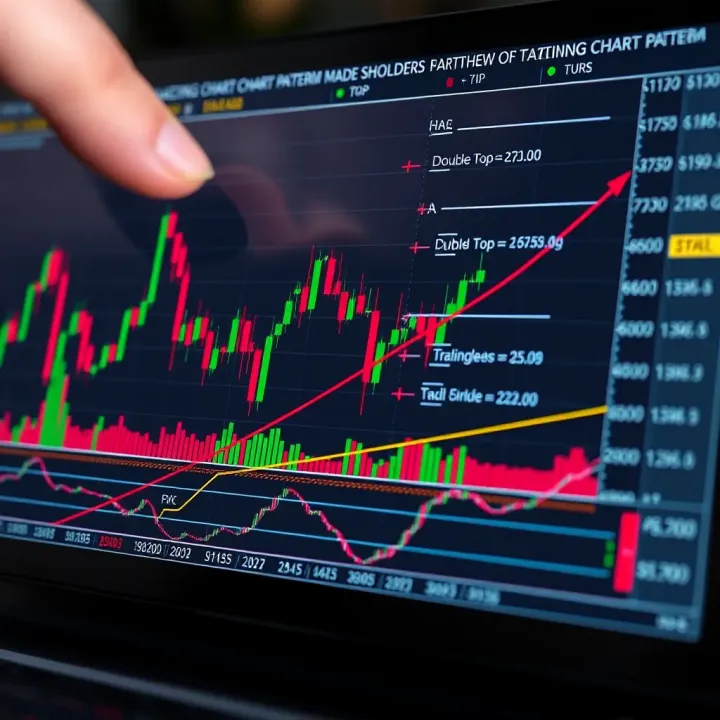
Trading Chart Patterns Explained with PDF Guides
📈 Explore key trading chart patterns crucial for technical analysis in Pakistan. Learn with examples plus downloadable PDFs to boost your trading skills.
Edited By
Sophie Mitchell
Price action trading relies solely on price movements, without the crutch of indicators or complex algorithms. For Pakistani traders, understanding price action chart patterns is like reading the market's own story in real time. These patterns reveal the battle between buyers and sellers, helping you spot potential trend reversals, continuations, or market indecision.
At its core, price action analysis studies the shapes and formations candles and bars make on a chart. For example, a ‘double top’ pattern may signal a bearish reversal, while a ‘flag’ pattern often indicates a brief pause before a continuation of the current trend. Recognising such patterns allows you to make better entry and exit decisions.
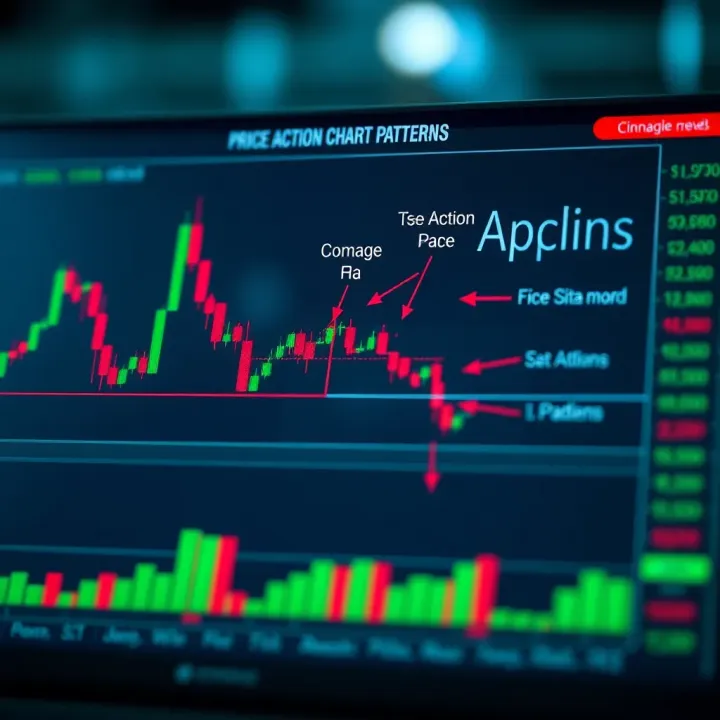
Getting familiar with price action patterns improves your ability to predict market moves rather than just react.
Key price action patterns include:
Reversal patterns: double tops/bottoms, head and shoulders
Continuation patterns: flags, pennants, rectangles
Indecision patterns: doji, spinning tops
In Pakistan’s market context, these patterns can be applied both in equities trading on the Pakistan Stock Exchange (PSX) and in foreign exchange or commodities markets accessible through local brokers.
Using PDF resources that compile chart patterns, with clear illustrations and examples, can fast-track your understanding. These PDFs often come with historical case studies showing how patterns played out in past markets, which is valuable for practical learning.
Mastering price action chart patterns won’t guarantee profits, but it equips you with a crucial skill: reading the market’s mood through price behaviour itself. It’s a skill that Pakistani traders can develop alongside other analytical tools to improve overall trading success.
Price action forms the backbone of trading decisions, especially for those who prefer to rely on raw market data rather than lagging indicators. Understanding price action means focusing on how prices move on charts over time without the clutter of secondary tools. This basic grasp helps traders read market behaviour directly, making it easier to spot opportunities or threats early.
Price action refers to the movement of an asset's price shown through charts such as candlesticks, bars, or lines. It captures every buy and sell decision made by market participants, making it an unfiltered record of market dynamics. For example, when the KSE-100 index sharply drops and then quickly recovers within the same session, the price action tells us that sellers dominated initially but buyers stepped in forcefully.
The importance of price action lies in its transparency — it removes guesswork by showing what price levels attracted attention. Pakistani traders, especially those trading equities or commodities on local exchanges, benefit from this approach because it captures local market quirks such as high volatility during political announcements or economic data releases. In short, price action offers a real-time snapshot of market sentiment without any delay.
Market sentiment, the collective mood of buyers and sellers, is embedded in price action patterns. When prices steadily advance with little retracement, it signals strong bullish sentiment. On the other hand, choppy or sideways price moves suggest indecision or balance between bulls and bears.
Consider the example of a stock like Habib Bank Limited (HBL). If its price forms higher highs and higher lows over several days, traders understand confidence is growing around the stock. Conversely, sudden large selling candles indicate shifts in sentiment, often triggered by external news such as interest rate changes by the State Bank of Pakistan (SBP).
Price action does not just show numbers; it reveals what traders feel and how they react to market events in real time.

By focussing on price action, traders develop an intuitive grasp of market tempo and risk. They learn when momentum fades or picks up, when sentiment shifts, and can thus refine entries and exits for better outcomes. Especially in Pakistan’s markets, where fundamental data may lag, price action provides the means to act swiftly and confidently.
Understanding these basics is the first step toward mastering chart pattern analysis, setting the stage for deeper insights covered in later sections.
Understanding common price action chart patterns is a key skill for traders and investors aiming to read market moves more clearly. These patterns reveal the ongoing battle between buyers and sellers, showing whether a price trend will likely continue, reverse, or pause. In markets like Pakistan’s, where economic factors and sentiments can shift quickly, recognising these patterns helps make smarter entry and exit decisions.
Flags and Pennants are short-term continuation patterns that appear after a strong price movement. Imagine a rocket taking off; the flag or pennant forms as a brief pause before the next surge. Flags typically look like small rectangles slanting against the prevailing trend, while pennants resemble tight triangles. For example, if a stock in the KSE 100 index rockets up due to positive earnings news, spotting a flag pattern could suggest the uptrend will continue, offering a chance to hold or add positions.
Triangles also indicate trend continuation but unfold over longer periods compared to flags. They come in various forms: ascending, descending, and symmetrical, each hinting at momentum in specific directions. An ascending triangle, with a flat resistance line and rising support, often signals bullish continuation, which is useful during times of steady economic optimism. Traders watch for a breakout above resistance to confirm this. By contrast, descending triangles suggest bearish continuation, handy when analysing stocks affected by local economic downturns.
Head and Shoulders is a reliable reversal pattern signalling that an existing trend is losing steam. It features three peaks: a higher peak (head) between two lower ones (shoulders). After an uptrend in a stock like Hub Power Company Limited (HUBC), spotting this pattern suggests sellers are gaining control and prices may decline. The inverse head and shoulders pattern similarly marks potential bullish reversals after downtrends, giving traders a clear exit or entry point.
Double Tops and Bottoms indicate price rejection at certain levels. A double top forms when price hits a resistance level twice without clearing it, pointing to a likely downturn, whereas a double bottom shows support holding firm twice, signalling an uptrend may begin. For instance, a bank stock failing twice to climb beyond Rs 100 could be ripe for a dip, while a textile firm maintaining support near Rs 40 might rebound.
Doji Candles appear when opening and closing prices are nearly the same, reflecting market indecision. In Pakistani markets, you might see a doji after steep moves driven by news like policy announcements or geopolitical events. This signals traders to be cautious — prices could swing either way next.
Rectangles represent consolidation where prices move sideways between clear support and resistance zones. Think of it as the market catching its breath before choosing a direction. A stock might trade within Rs 50 to Rs 55 for weeks, allowing traders to plan breakouts or breakdowns based on volume and momentum.
Recognising these patterns equips traders with insight to time their moves better, avoid false signals, and manage risk, especially in Pakistan’s dynamic financial markets.
By mastering these common price action chart patterns, you can interpret market behaviour more confidently, making your trading strategy sharper and more responsive to real-time shifts.
Understanding how price action patterns play out in Pakistani markets is key for traders to make better decisions. Unlike global markets, Pakistan’s economic and political landscape introduces specific twists that affect pattern reliability. Recognising these local nuances helps you use chart patterns more effectively, avoiding false signals.
The Karachi Stock Exchange (KSE), now part of the Pakistan Stock Exchange (PSX), often exhibits price action influenced by blue-chip companies like Pakistan Oilfields, Lucky Cement, and Habib Bank. For instance, during the FY 2022-23 economic downturn, the head-and-shoulders pattern appeared multiple times, signalling reversals as investor confidence shook amidst foreign exchange shortages and rising inflation.
When applying trend continuation patterns like flags on KSE charts, it’s important to confirm volume surges during breakouts, as low participation sometimes leads to fake moves. For example, the 2023 rally in cement stocks showed clear pennant patterns supported by increased trading volume after the government announced infrastructure projects. Such local examples underline that volume confirmation and news events matter just as much as pattern shape.
Price action in Pakistani markets responds sharply to domestic events: changes in SBP monetary policy, tax announcements by FBR, and political developments. For example, repeated loadshedding in Sindh or Punjab can dampen market enthusiasm, causing patterns like rectangles (consolidations) to form before decisive price moves.
Inflation rates and rupee fluctuations also add noise. Sudden spikes in inflation often trigger panic selling, breaking through supports shown by double bottoms or triangles, making pattern interpretation tricky unless you factor in economic reports. Similarly, anticipation of budget speeches can create false breakouts as traders position themselves ahead of policy decisions.
Tip: Always look for cluster confirmations — combine pattern signals with economic calendars and local market news before placing trades.
In summary, interpreting price action in Pakistan requires adapting to market behaviour shaped by economic realities, political events, and sector-specific news. Combining traditional pattern recognition with an understanding of these factors raises your chances of spotting genuine trade setups.
PDF guides and chart pattern templates are highly practical tools for traders aiming to understand price action deeply. These materials allow you to study complex chart formations at your own pace while having clear visual references. For instance, when analysing a KSE-100 index chart, having a PDF with annotated examples of head and shoulders patterns makes recognising it on real charts easier and quicker.
PDFs offer several advantages over other learning formats. First, they are portable and can be accessed offline, perfectly suited for Pakistani traders who may face intermittent internet connectivity issues. Second, structured PDF guides usually combine theory with annotated visuals, simplifying difficult concepts like flag and pennant patterns or double tops.
Templates specifically help by providing ready-made outlines where traders can practise drawing or spotting patterns themselves. This hands-on approach aids in memorising pattern characteristics effectively. Moreover, well-crafted PDFs often include tips, common mistakes, and trading signals related to specific chart formations, which helps sharpen decision-making.
Look for PDF guides tailored to local market dynamics, such as those covering Karachi Stock Exchange (KSE) trends and relevant economic indicators. Resources from established trading academies or financial websites focusing on Pakistani markets carry more pertinent examples. For example, PDFs incorporating recent KSE trends alongside technical analysis provide up-to-date context.
Additionally, FBR and SECP reports sometimes offer market insights useful in combining fundamental factors with price action analysis. Local brokerage firms occasionally release downloadable material for client education, blending international patterns with Pakistan-specific case studies.
Set clear study goals: Focus on one pattern or concept at a time instead of skimming through many at once.
Practice actively: Use a printout or digital tool to mark patterns on historical KSE charts to reinforce learning.
Revisit challenging sections: PDF bookmarks and annotations help jump back to tricky parts without wasting time.
Combine theory with live observation: Try applying what you learn immediately by reviewing live charts on local trading platforms like PSX’s official website.
Keep notes: Summarise important points in your own words to internalise concepts better.
Consistent use of PDF guides strengthens not only pattern recognition skills but builds the confidence to interpret price action in real trading scenarios, particularly in Pakistani markets affected by local economic factors.
Using well-designed PDF resources can be a game-changer. They put control of learning in your hands, enabling you to revisit complex price action principles repeatedly until mastery. This self-paced, visual, and practical method suits traders from beginners to advanced analysts aiming to make informed, timely decisions in Pakistan’s vibrant markets.
📈 Explore key trading chart patterns crucial for technical analysis in Pakistan. Learn with examples plus downloadable PDFs to boost your trading skills.

📈 Master trading chart patterns with our detailed guide! Learn key types, impact, and how PDF resources can boost your trading success in Pakistan.

📊 Master trading chart patterns with our detailed guide! Find free PDF resources and tips tailored for traders in Pakistan 🇵🇰 to boost your skills.

📈 Discover how to spot key trading patterns and use them in real markets. Learn practical tips and find handy PDF books to boost your trading skills!
Based on 10 reviews